
Illustrated recipe
Tomato and Egg Stir-Fry
A first-timer-friendly guide that explains what to do, how to set the stove, and what you should see before moving on.

What you need
Tick off each ingredient as you set it out. The steps tell you when to taste a cooked dish and how to adjust the flavour.
How big is a teaspoon or tablespoon?
1 tsp is a 5 mL measuring spoon. 1 US tbsp is 15 mL, or 3 tsp. For flour or sugar, sweep the top level with the back of a knife.
Set these out first
Set out a frying pan or wok and a spatula. Use a knife and board for the tomatoes and a bowl with chopsticks or a fork for the eggs. Keep a clean plate for the cooked eggs and a small spoon for tasting.
How high should I turn the heat?
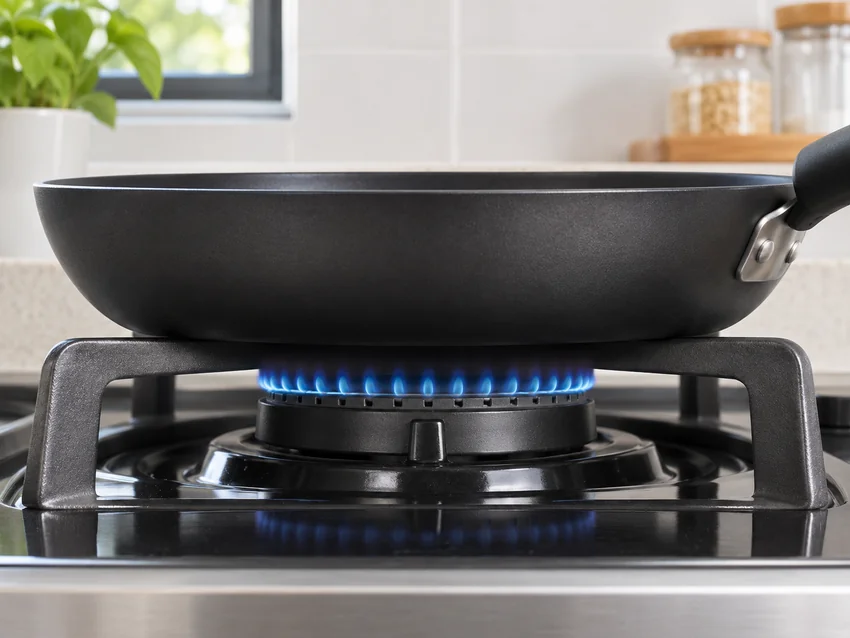
Gas stove: Set the pan on the burner and add the oil before lighting it. Start with the knob about halfway between low and high. Look at the pan from the side. If flames come up the sides, turn the knob down until the flames stay underneath.
Electric or induction stove: If the settings run from 1 to 9, start at 4. Stoves vary, so check what happens to a drop of egg.
Ready for the eggs? Let one small drop of beaten egg fall into the oil. When you hear a gentle sizzle and the edge turns pale yellow and holds its shape, pour in the rest. If nothing happens, wait a little, then turn the heat up slightly if needed. If the oil smokes, turn the stove off and let the pan cool a little before restarting at a lower setting.
6 steps with pictures
-
 AI illustration
Step 01
Wash and cut the tomatoes
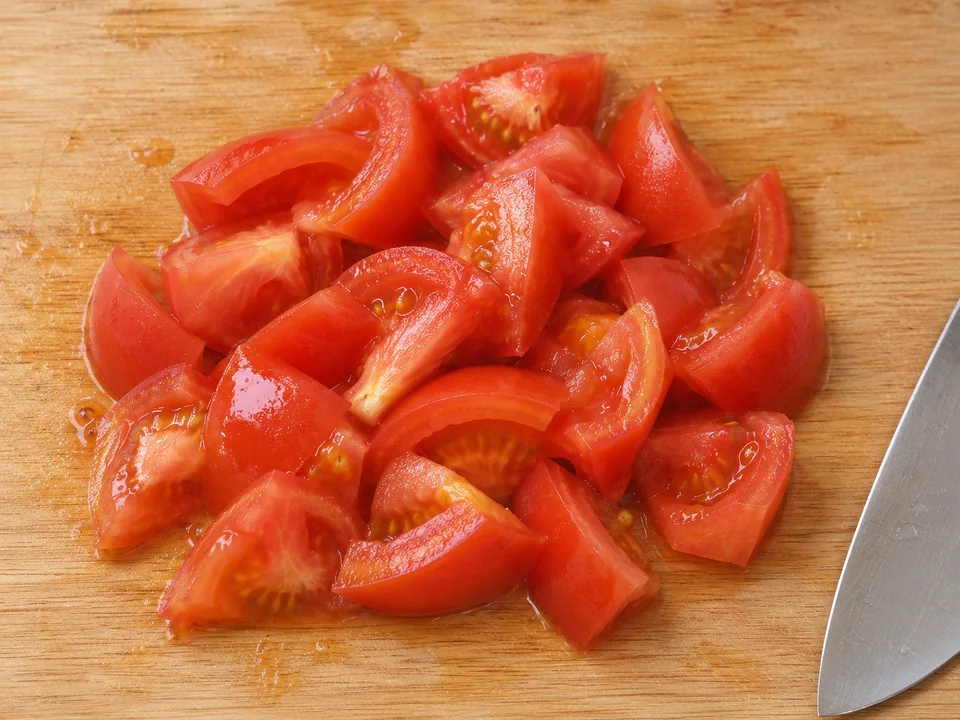
- Rinse the tomatoes under running water and pull off the green leaves at the top.
- Cut each tomato in half. Put the flat, cut side on the board so the tomato does not roll.
- Cut each half into pieces about 2–3 cm (about 1 inch) wide. Each piece should be small enough to eat in one bite.
- Keep any tomato juice left on the cutting board. It goes into the pan with the tomato pieces.
Cook from this stepHow to tell you’re readyMost pieces are about the same size. Leave the skins on.
-
 AI illustration
Step 02
Mix the eggs
- Tap one egg gently on a clean, flat counter until a crack appears.
- Hold the cracked egg over the bowl. Put your thumbs on the two sides of the crack and slowly pull the shell apart so the egg falls into the bowl. Repeat with the other two eggs.
- Throw away the shells and wash your hands. If a piece of shell fell into the bowl, lift it out with a clean spoon. Wash the spoon before using it again.
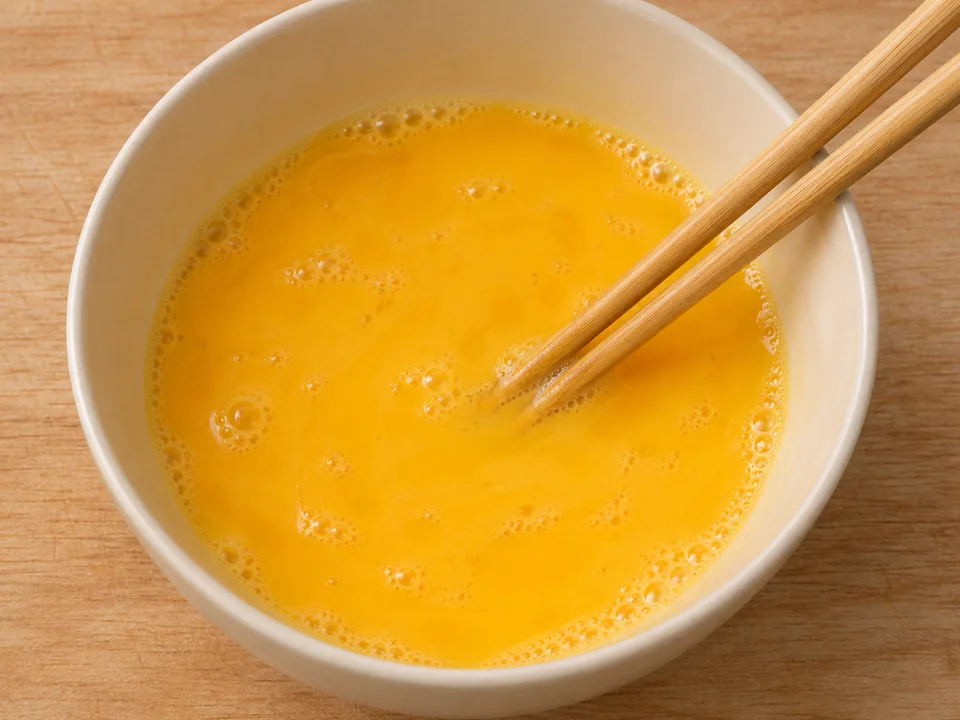
- Take a small pinch of salt between your thumb and forefinger and sprinkle it into the eggs.
- Stir back and forth with chopsticks or a fork until the bowl is an even yellow and you cannot see thick, clear strands of egg white.
Cook from this stepHow to tell you’re readyThe egg mixture is an even yellow. A few small bubbles on top are fine.
-
 AI illustration
Step 03
Cook the eggs, then move them to a plate
- Put a clean, empty plate beside the stove so it is ready for the cooked eggs.
- Set a dry pan on the burner and add half the oil, about 6 mL (1¼ US teaspoons). Turn on the stove. On gas, start about halfway between low and high and keep the flames under the pan. On an electric stove numbered 1–9, start at 4.
- Hold the handle and gently tilt the pan to spread the oil. Set it flat again. Tilt the bowl just enough to let a small drop of egg fall into the oil.
- Watch the drop. If it stays runny and you hear almost nothing, give it a little longer. If nothing changes, turn the stove up slightly and try another drop.
- When a drop sizzles gently and its edge turns pale yellow and holds its shape, slowly pour in the rest of the egg.
- Wait a few seconds. When a thin sheet of cooked egg forms around the edge, gently push it toward the middle with the spatula. Let the runny egg flow onto the empty part of the pan, then push again.
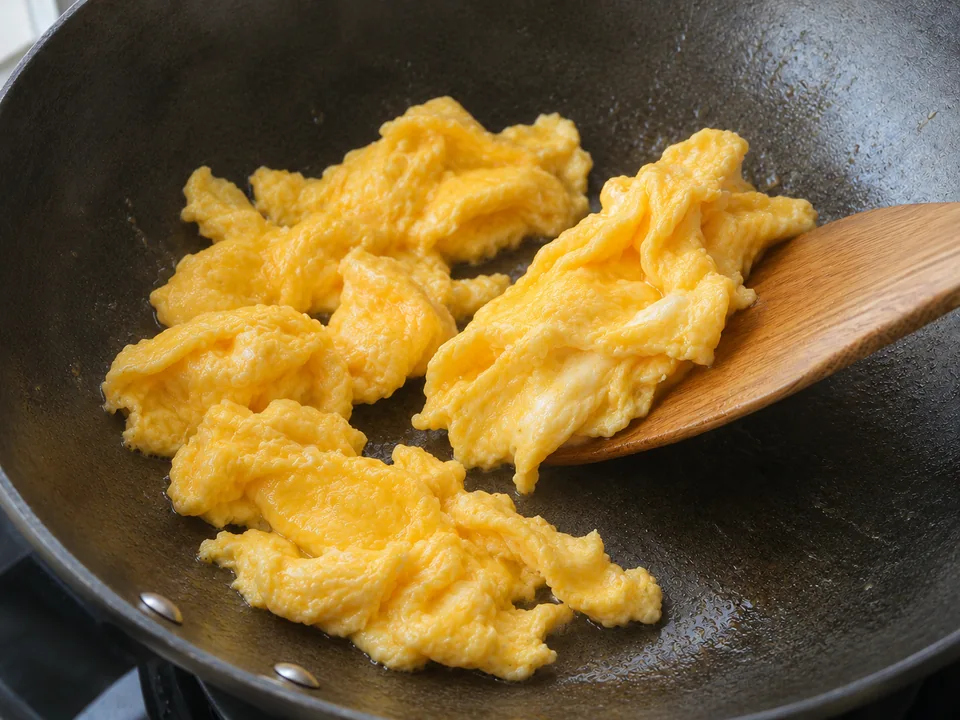
- Tilt the pan slightly. If liquid egg runs downhill, set it flat and push the eggs a few more times. Once no liquid egg runs out, turn the stove off and slide the eggs onto the clean plate.
Cook from this stepHow to tell you’re readyThe eggs are soft yellow pieces with a slightly shiny surface. There is no liquid, uncooked egg moving around the pan.
-
 AI illustration
Step 04
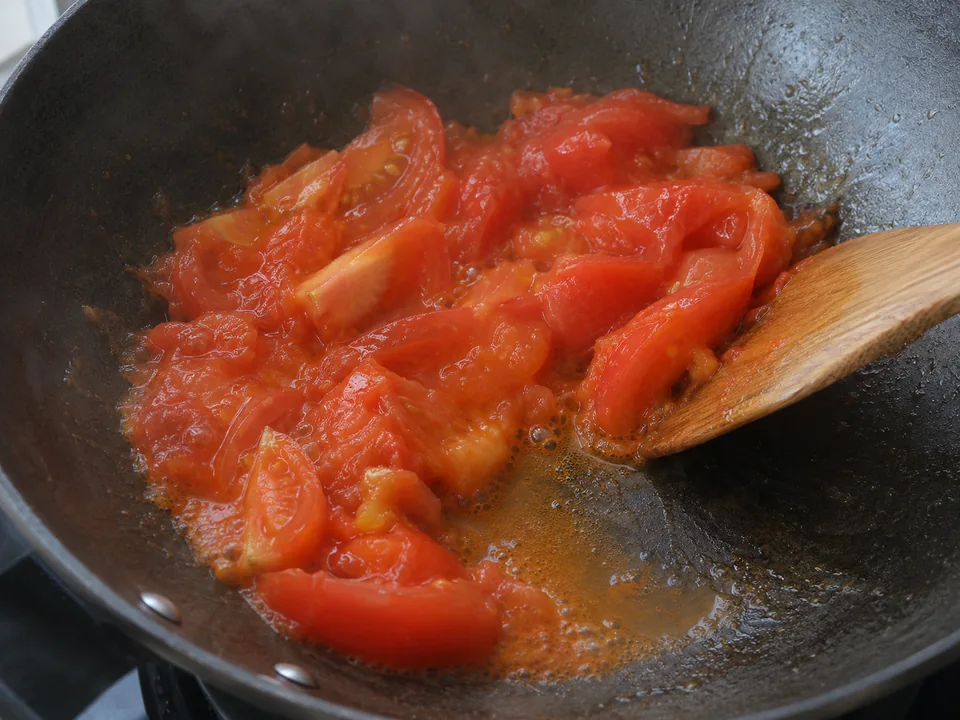
Cook the tomatoes until they soften and release juice
- After moving the eggs to the plate, put the pan back on the stove and add the remaining 6 mL (1¼ US teaspoons) oil.
- Add the tomato pieces and all the juice from the board. Once the eggs are back in the pan you can taste them together and decide how much more salt to add.
- Turn the stove back on at the setting you used for the eggs. Every 10–15 seconds, slide the spatula under the tomatoes and turn a few pieces over so the ones on top get a turn on the bottom.
- When some pieces start to slump, push a few aside. Add the eggs when you see little bubbles in the orange-red juice at the bottom. This usually takes about 2–4 minutes.
Cook from this stepHow to tell you’re readySome tomato pieces still hold their shape and others have softened. When you gently move them aside, you can see orange-red juice and small bubbles at the bottom of the pan.
-
 AI illustration
Step 05
Add the cooked eggs to the tomatoes
- Slide all of the cooked eggs from the plate into the pan.
- Slide the spatula under some tomato and egg, gently lift them, and turn that small section over so tomato juice touches the egg. Do this only three or four times.
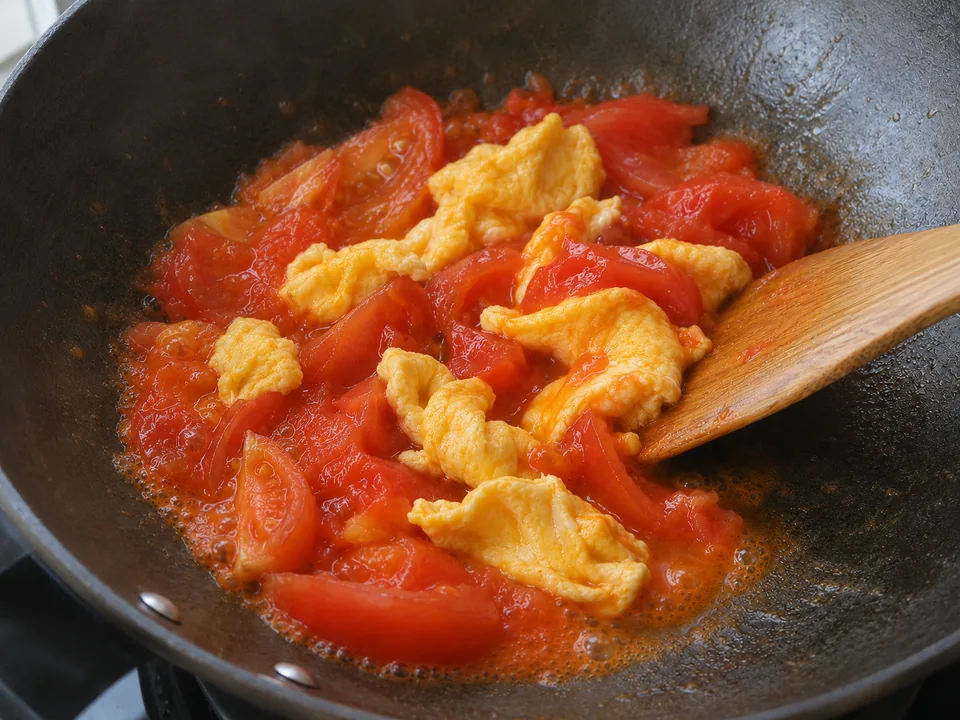
- Wait until the outside of the eggs is covered with orange-red tomato juice. Start checking after 20–40 seconds, but use the appearance as your guide.
Cook from this stepHow to tell you’re readyThe outside of the egg pieces is covered with tomato juice. The eggs still look soft and stay in pieces.
- AI illustration
Step 06
Turn off the stove and serve
- Once the egg pieces are coated in tomato juice, turn the stove off. Check that the flames have gone out or that the electric burner is switched off.
- Cool a spoonful of egg with a little tomato juice and taste them together. If bland, add a small pinch of salt. If the salt tastes right but the tomato makes you pucker, try a small pinch of sugar. Stir, then taste again with a clean spoon.
- Slide the tomatoes and eggs onto a plate. Spoon as much of the juice over them as you like.
Cook from this stepHow to tell you’re readyThe plate has soft pieces of egg, tomato pieces that still have some shape, and only a little juice at the bottom.
My eggs are breaking into little bits. Can I save the bigger pieces?
Stop stirring in circles. Push each sheet of set egg gently towards the middle and let the runny egg flow onto the bare part of the pan.
Tilt the pan. When no liquid egg runs across it, slide the eggs onto a clean plate. Keep the small pieces too. Spoon the tomatoes over them at the end so you don’t break them up further.
See the picture in step 3Why are my tomatoes still firm with no juice in the pan?
Turn the heat down, spoon a tablespoon of water over the tomatoes and cover for a minute. Lift the lid, turn the tomatoes over and gently press one or two pieces with the spatula.
Push the tomatoes aside. Once a little orange-red juice is bubbling underneath, fold the eggs back in. Some tomato pieces can still hold their shape.
See the picture in step 4My tomatoes have turned into soup. When should the eggs go back in?
Keep the eggs out for now. Cook uncovered and scrape gently across the bottom every 10–15 seconds so the tomatoes do not stick.
Add the eggs when moving the tomatoes reveals only a shallow layer of bubbling juice rather than liquid covering the pieces.
See the picture in step 4My tomato and eggs taste too sour. Should I add sugar or salt?
Cool a spoonful of cooked egg and tomato together. If it is salty enough but makes you pucker, try just a few grains of sugar in that spoonful.
If you like that bite, fold a small pinch of sugar into the whole dish and taste again with a clean spoon. You can keep as much of the tomato tang as you enjoy.
See the picture in step 6More help by step
- Step 1 · Wash and cut the tomatoes
- Cut any much larger piece one more time. Similar-size pieces will soften at about the same time.
- Step 2 · Mix the eggs
- If you still see clear egg white, stir a little longer. Do not mix the tomatoes into the eggs.
- Step 3 · Cook the eggs, then move them to a plate
- If the oil starts smoking, turn the stove completely off and do not add the eggs. Wait until the smoke is gone and the pan has cooled a little, then heat it again at a lower setting. If the egg edges quickly turn dark brown, lower the setting, but keep cooking until no liquid egg is moving before putting the eggs on the plate.
- Step 4 · Cook the tomatoes until they soften and release juice
- If the tomatoes stick and smell burnt, turn the stove down. Gently loosen them and leave any black bits stuck to the pan. If the pan looks soupy, give the tomatoes a little longer before adding the eggs so some of the water cooks away.
- Step 5 · Add the cooked eggs to the tomatoes
- If the eggs start breaking into small pieces, set the spatula down. Spoon a little of the tomato juice over the eggs instead.
- Step 6 · Turn off the stove and serve
- If it tastes too salty, slide the dish onto a plate. Cut up another half tomato and cook it in the same pan with a spoonful of water until juicy. Fold this into the plated eggs. If you have no more tomato, serve the eggs with less sauce and plain rice.
Kitchen notes
Ask about a step or share how it turned out. Your comment will be public.
Loading comments…