
Illustrated recipe
Furong-Style Steamed Egg Custard, Modern Home Version
Li Dou’s Qing-dynasty Yangzhou huafang lu lists “furong egg” in a Manchu–Han banquet menu but gives no recipe. The method below is a modern steamed-egg version for home kitchens.
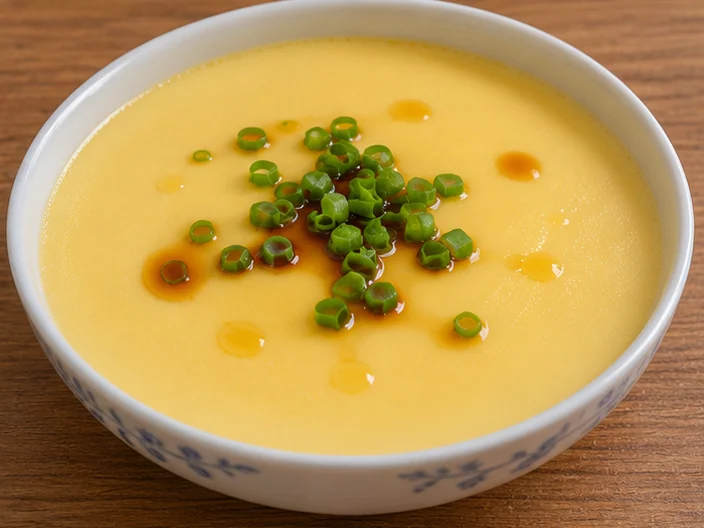
What you need
Tick off each ingredient as you set it out. The steps tell you when to taste a cooked dish and how to adjust the flavour.
How big is a teaspoon or tablespoon?
1 tsp is a 5 mL measuring spoon. 1 US tbsp is 15 mL, or 3 tsp. For flour or sugar, sweep the top level with the back of a knife.
Set these out first
Set out a small bowl for cracking each egg and a larger bowl for mixing. Have chopsticks or a whisk, a fine sieve, a clean spoon, a shallow heatproof dish and a heatproof plate that fits over it. Try the covered dish in the steamer first and check that the lid closes.
How high should I turn the heat?
Bring the steamer water to a steady steam first. Once the egg goes in, keep a short gas flame beneath the pan or use 3–4 out of 9 on electric. A little steam should escape at the rim without making the lid rattle hard.
6 steps with pictures
-
 AI illustration
Step 01
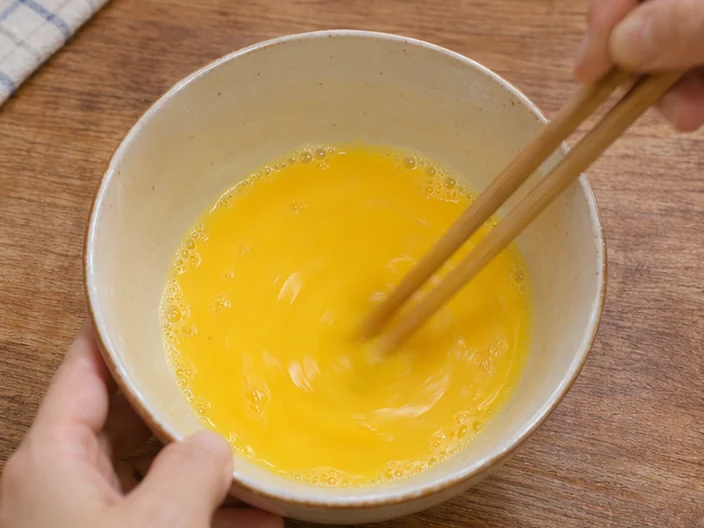
Beat the eggs until even
- Use a small bowl first. Tap each egg on a flat worktop, open it over the small bowl, and check for shell fragments or an off smell before adding it to the mixing bowl. Repeat with all three eggs, then add the salt and wash your hands.
- Move chopsticks back and forth along the base until the yolks and whites become an even yellow mixture.
Cook from this stepHow to tell you’re readyNo large ropes of clear egg white hang from the chopsticks, and only small bubbles sit on the surface.
-
 AI illustration
Step 02
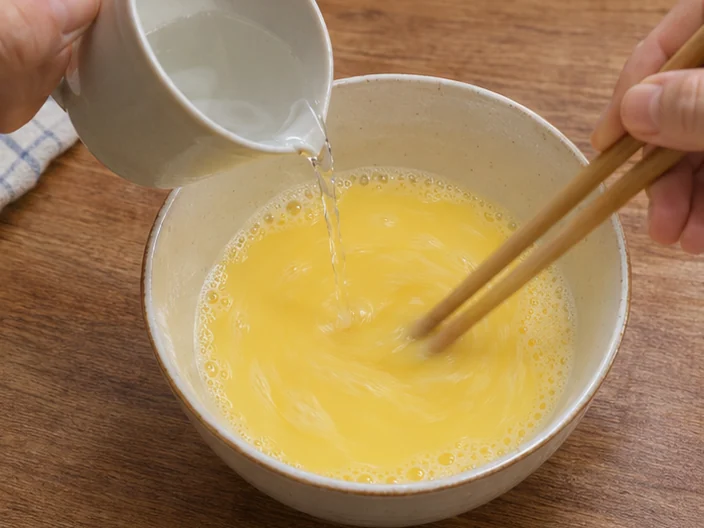
Add the warm water in three batches
- Add one-third of the warm water and stir gently until even.
- Add the remaining water in two more batches, mixing each one in before continuing.
Cook from this stepHow to tell you’re readyThe mixture is an even pale yellow and pours freely, with no separate layer of water.
-
 AI illustration
Step 03
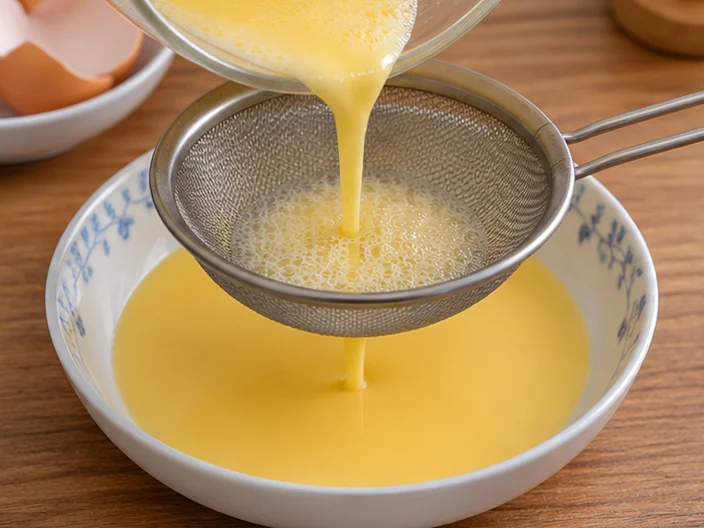
Strain out foam and egg strands
- Set a fine sieve over the shallow heatproof dish and pour the egg mixture through slowly.
- Do not force the egg strands left in the sieve into the dish. Skim large bubbles from the surface with a spoon.
Cook from this stepHow to tell you’re readyThe surface is level, with only a few pin-sized bubbles.
-
 AI illustration
Step 04
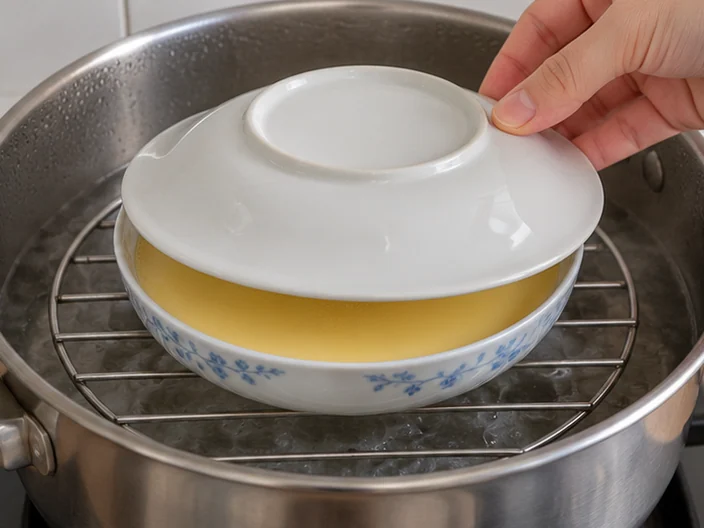
Cover the egg dish and place it in the steamer
- Add water below the steamer rack. Cover and heat until steam escapes steadily around the lid.
- Cover the egg dish with a heatproof plate so condensation cannot drip into it. Set it on the rack and close the steamer.
Cook from this stepHow to tell you’re readyThe dish sits level, the steamer closes fully, and a little steam escapes steadily around the rim.
-
 AI illustration
Step 05
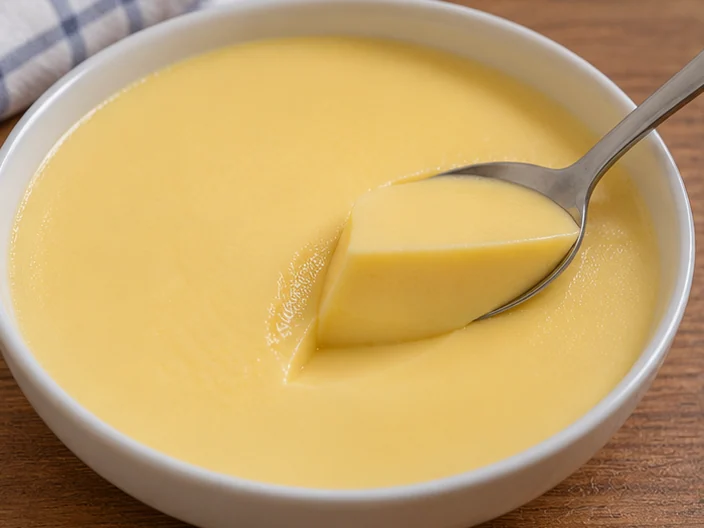
Steam until the centre sets, then check
- Once the dish is in, use a short gas flame beneath the pan or 3–4 out of 9 on electric. Steam for 10 minutes.
- Turn off the stove and wait 2 minutes. Lift the steamer lid away from you, then remove the plate covering the egg.
- Gently shake the dish. It is set when the edges stay still, the centre trembles slightly, and no liquid runs across the surface.
Cook from this stepHow to tell you’re readyThe surface is an even pale yellow. The centre trembles gently without visible runny egg.
- AI illustration
Step 06
Taste first, then add soy and sesame oil
- Scoop a little from the edge with a clean spoon, let it cool, and taste.
- If it tastes right, add only sesame oil. If bland, pour soy sauce around the edge, starting with half and tasting before adding the rest.
- Scatter over scallion. When opened with a spoon, the inside should be tender and contain no runny egg.
Cook from this stepHow to tell you’re readyThe custard lifts in a soft spoonful, with a moist fine-textured cut and no pool of water underneath.
A lot of lid water fell onto the custard. How should I check it afterward?
Spoon the clear surface water away without stirring it into the egg. Still complete the recipe’s full 10-minute steam and 2-minute covered rest before doing its original movement check.
Harder steaming will not remove lid water. If liquid still moves after the recipe’s check, cover and continue in 2-minute rounds as directed. Do not taste before completing the check.
See the picture in step 5The custard edge is firm but the centre has not passed the recipe’s check. What now?
Ignore the firm edge for now. Cover again, steam for only 2 minutes at a time as directed, then turn off the heat and check the centre. Do not taste before completing the check.
The firm edge cannot become tender again, and it does not justify shortening the centre’s needed cooking. Once the recipe’s check is complete, cut the edge small and serve it with the softer centre.
See the picture in step 5The surface has holes and cracks. How should I handle it?
Holes do not show whether the centre has completed the recipe. Finish the specified steaming, rest and centre check before tasting, then add only a little soy and sesame oil and serve each spoonful with some softer centre.
Holes and cracks cannot be smoothed away. Once the recipe’s check is complete, keep the coarser custard rather than steaming longer in an attempt to smooth it.
See the picture in step 6More help by step
- Step 1 · Beat the eggs until even
- If clear pieces remain, mix for another 30 seconds. Avoid beating a thick cap of foam into the egg.
- Step 2 · Add the warm water in three batches
- If all the water went in at once, do not add more egg. Stir gently until the colour is completely even.
- Step 3 · Strain out foam and egg strands
- Without a sieve, rest the mixture for 3 minutes and skim large bubbles. The custard may be slightly coarser but can still be steamed.
- Step 4 · Cover the egg dish and place it in the steamer
- If the steamer will not close, the egg dish or its cover is too large. Use a smaller heatproof dish rather than steaming under a tilted lid.
- Step 5 · Steam until the centre sets, then check
- If liquid runs in the centre, cover and steam for 2 more minutes over the same short flame, then check again. Many holes on top mean the steam was too strong; lower the heat next time.
- Step 6 · Taste first, then add soy and sesame oil
- If it becomes too salty, add no more seasoning and serve it with plain rice or unseasoned vegetables. A little water under the custard is still edible; use 1 tablespoon less water next time.
Kitchen notes
Ask about a step or share how it turned out. Your comment will be public.
Loading comments…