
Illustrated recipe
Fuzhou Sweet-and-Sour Pork
There is no lychee fruit in this dish. Scored pork curls as it cooks, then gets coated in a sweet-and-sour sauce. This home version uses water chestnuts, as in the Fuzhou dish.
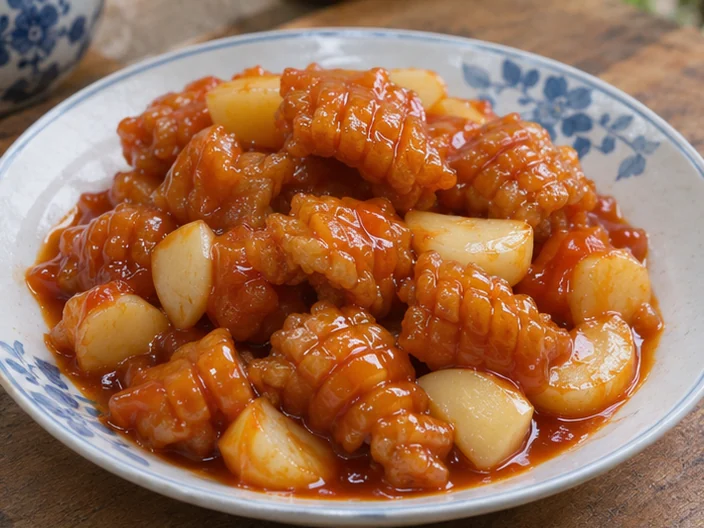
What you need
Tick off each ingredient as you set it out. The steps tell you when to taste a cooked dish and how to adjust the flavour.
How big is a teaspoon or tablespoon?
1 tsp is a 5 mL measuring spoon. 1 US tbsp is 15 mL, or 3 tsp. For flour or sugar, sweep the top level with the back of a knife.
Set these out first
You need a knife, board, 3 bowls, paper towels, a deep wok or frying pan, spatula, and slotted spoon. Wash everything that touched raw pork before it touches cooked food.
How high should I turn the heat?
Use about 2 cm (¾ inch) of oil. Test it with one coated pork piece. Steady bubbles should appear around it at once. If it sits quietly, wait a little longer. If the oil smokes, turn the stove off and let it settle before reheating more gently.
5 steps with pictures
-
 AI illustration
Step 01
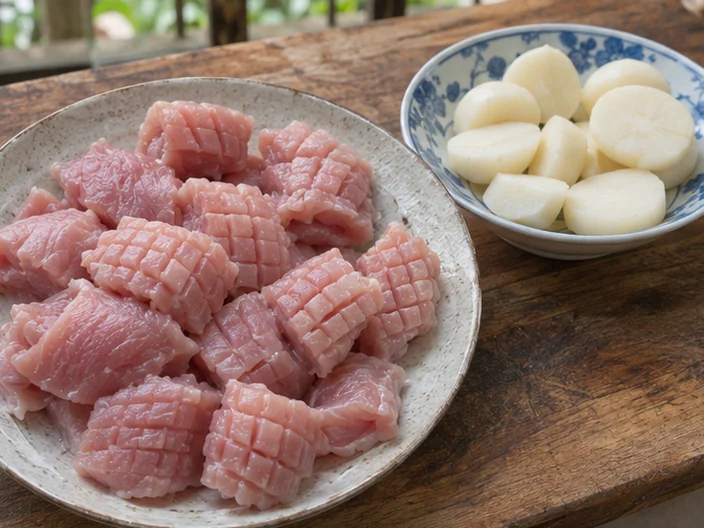
Cut and score the pork
- On a clean board, halve the water chestnuts and move them to a clean bowl. Drain canned water chestnuts first.
- Pat the pork dry and cut it into slices about 1 cm / ⅜ inch thick. Score one side diagonally, then score across it to make small diamonds, cutting halfway through rather than all the way.
- Cut the scored slices into 3 cm / 1¼-inch pieces and put them in a separate bowl. Immediately wash your hands, knife, board, and counter with hot soapy water.
Cook from this stepHow to tell you’re readyThe pieces stay whole and the scored side opens slightly.
-
 AI illustration
Step 02
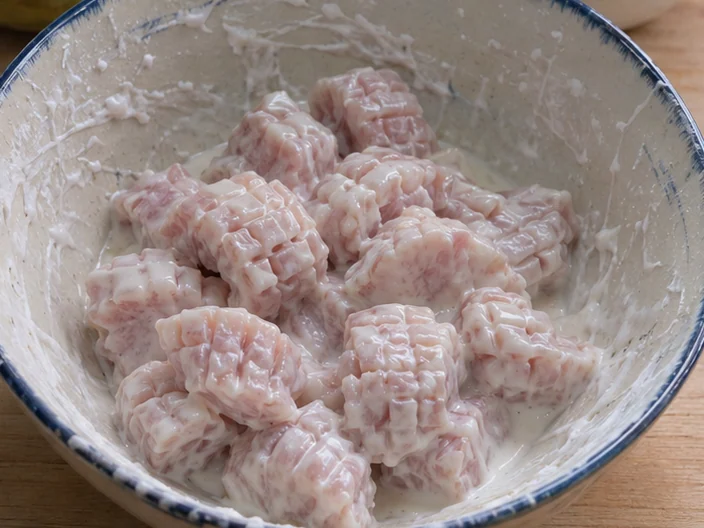
Coat the pork
- Add 2 tablespoons water and 35 g cornstarch to the pork. Mix until every piece looks white.
- Rest 10 minutes. In another bowl, mix the sugar, vinegar, ketchup, soy sauce, 80 mL water, and remaining 10 g cornstarch.
- Stir the sauce again just before using because the cornstarch sinks.
Cook from this stepHow to tell you’re readyA thin white coating clings to the pork, with no puddle in the bowl.
-
 AI illustration
Step 03
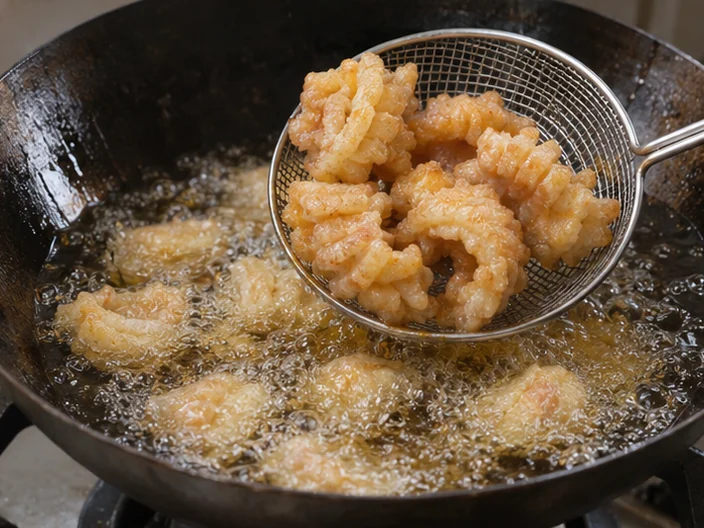
Fry the pork in batches
- Set the pan securely. Pour in oil to about 2 cm / ¾ inch deep and no more than halfway up the pan. Keep a metal lid that completely covers the pan beside the stove. Add one coated pork piece first; when small bubbles stream around it, add the rest of that batch.
- Fry in two batches without crowding. Cook each for 3–4 minutes, turning midway. Cut open the thickest piece and remove the batch only when the centre is pale with no glossy pink meat.
Cook from this stepHow to tell you’re readyThe pork is pale golden and curled, and the thickest piece has no pink centre.
-
 AI illustration
Step 04
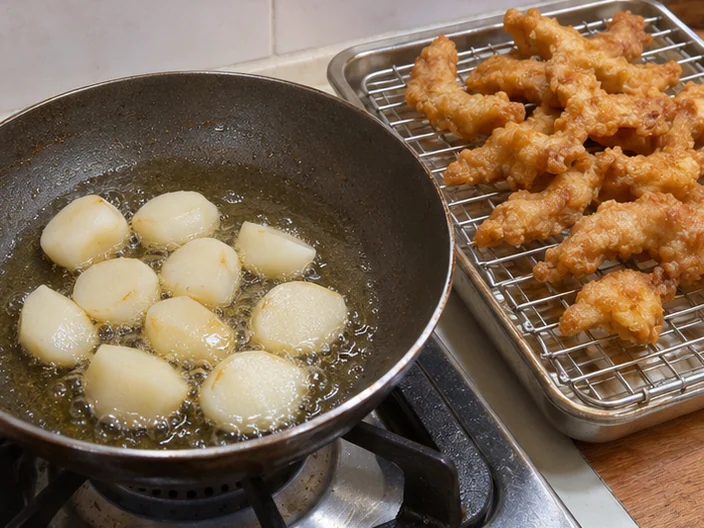
Briefly fry the water chestnuts after the pork
- After the previous step's cut piece confirms the pork batch is ready and all of it has been removed, fry the water chestnuts for about 30 seconds, then lift them out at once.
- Turn off the stove and leave the oil pan in place to cool naturally. Do not move it, add water, or pour it into a container until both pan and oil are completely cool.
Cook from this stepHow to tell you’re readyThe water chestnuts look hot and glossy but remain white rather than browned or soft.
- AI illustration
Step 05
Coat with the sauce
- Use a clean pan. Add the stirred sauce and keep moving it. After it bubbles for 30 seconds, cool and taste a clean spoonful. Add ½ teaspoon sugar if too sharp, or 1 teaspoon rice vinegar if too sweet, then taste again.
- Add the fried pork and water chestnuts. Toss for about 20 seconds so every piece is coated.
- Turn off the stove and serve at once.
Cook from this stepHow to tell you’re readyThe pork and water chestnuts have a shiny red coating. The sauce tastes balanced rather than sharply sour or sugary, with no large puddle underneath.
I cut right through the pork while making the little squares. Can I use those pieces?
Set the small pieces aside. Lay the rest flat on the board and make shallower cuts, leaving a layer of meat joined underneath. Coat the small pieces as usual and fry them in a separate batch.
Gently bend a scored piece. The squares should open while the base stays together. Serve the pieces you cut through as smaller bites in the same sauce.
See the picture in step 1The starch coating keeps dripping off the pork and pooling in the bowl. What should I do?
Sprinkle in 1 teaspoon cornstarch, mix and wait 30 seconds. Add only 1 more teaspoon if it still drips rather than adding a large amount at once.
The pork is ready when a thin coating stays on it and lifting a piece does not pull up a long trail of runny batter.
See the picture in step 2The coating went soft immediately after I added the sauce. What should I do?
Move the pork and water chestnuts out of the pan at once instead of leaving them in the pooled sauce. Put extra sauce in a small bowl for light dipping.
Stop once the pork is away from the puddle. Do not return sauced pork to the oil to make it crisp again. Sauce already absorbed cannot be removed, so serve promptly.
See the picture in step 5More help by step
- Step 1 · Cut and score the pork
- Broken pieces are usable; fry them separately and remove them sooner.
- Step 2 · Coat the pork
- If it drips, add 1 teaspoon starch. If powder stays dry, add 1 teaspoon water.
- Step 3 · Fry the pork in batches
- If the centre still has glossy raw meat, return the pieces for 30 seconds per side, then cut open another thick piece. Turn off the stove if the oil smokes and restart lower after the smoke clears. If the oil catches fire, turn off the stove and cover the pan with the metal lid; never add water.
- Step 4 · Briefly fry the water chestnuts after the pork
- If their edges begin to yellow, lift them out at once rather than leaving them in the oil.
- Step 5 · Coat with the sauce
- If thin, remove the pork and bubble the sauce longer. If thick, add 1 tablespoon water. Adjust flavour in the same small additions, stirring and tasting each time.
Kitchen notes
Ask about a step or share how it turned out. Your comment will be public.
Loading comments…