
Illustrated recipe
Shaanxi Hot-Oil Noodles
Wide noodles are topped with garlic, scallion and chilli, then finished with a small amount of hot oil. Turn off the stove before pouring and keep the bowl and seasonings dry.
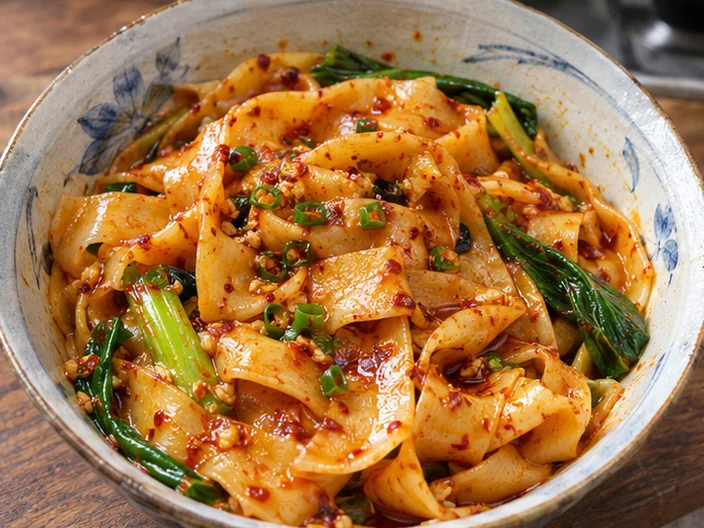
What you need
Tick off each ingredient as you set it out. The steps tell you when to taste a cooked dish and how to adjust the flavour.
How big is a teaspoon or tablespoon?
1 tsp is a 5 mL measuring spoon. 1 US tbsp is 15 mL, or 3 tsp. For flour or sugar, sweep the top level with the back of a knife.
Set these out first
You need a noodle pot, colander, two deep heat-safe bowls, a small pouring pan and oven mitts. Put the bowls on a stable, dry counter.
How high should I turn the heat?
Use 8–9 to boil the noodle water. Start around 5 for the oil and turn the stove off when it flows easily and shimmers slightly. Do not wait for smoke.
4 steps with pictures
-
 AI illustration
Step 01
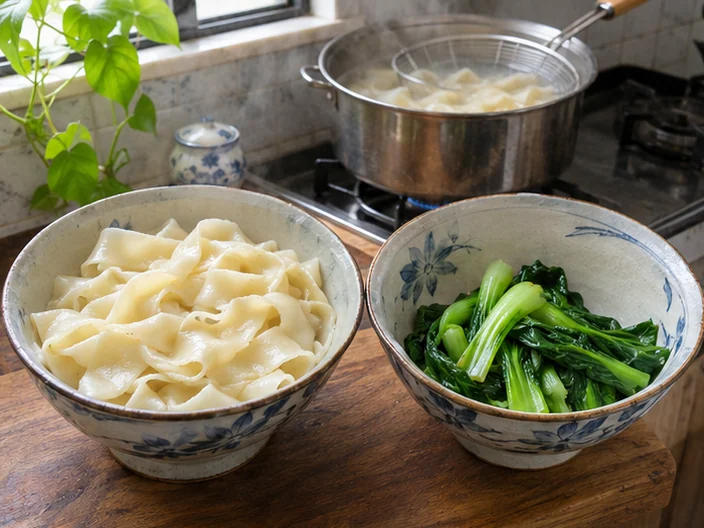
Cook the greens and noodles
- Fill a large pan with water, use setting 8 or 9 and wait for a rolling boil.
- Add the greens first. Cook for 30 seconds and divide them between two bowls with a slotted spoon.
- Add the wide noodles, separate them gently and cook for the packet time.
- Taste one noodle. When no hard white centre remains, turn off the stove and drain. Keep a small handful of plain noodles and greens in the colander, then divide the rest between the bowls.
Cook from this stepHow to tell you’re readyThe wide noodles are tender without breaking and the greens are bright and soft.
-
 AI illustration
Step 02
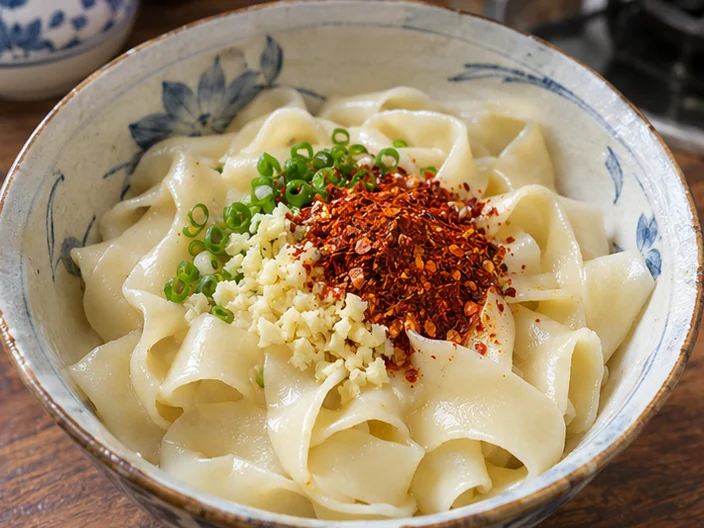
Pile the seasonings on top
- Add 2 tsp soy sauce and 2 tsp vinegar to each bowl around the edge, keeping the centre dry.
- Pile the garlic, scallion and 1 tsp chilli in the centre of each bowl.
- Dry the outside of each bowl and the counter, then make sure the bowls are stable.
Cook from this stepHow to tell you’re readyThe dry garlic, scallion and chilli are piled in the centre of the noodles.
-
 AI illustration
Step 03
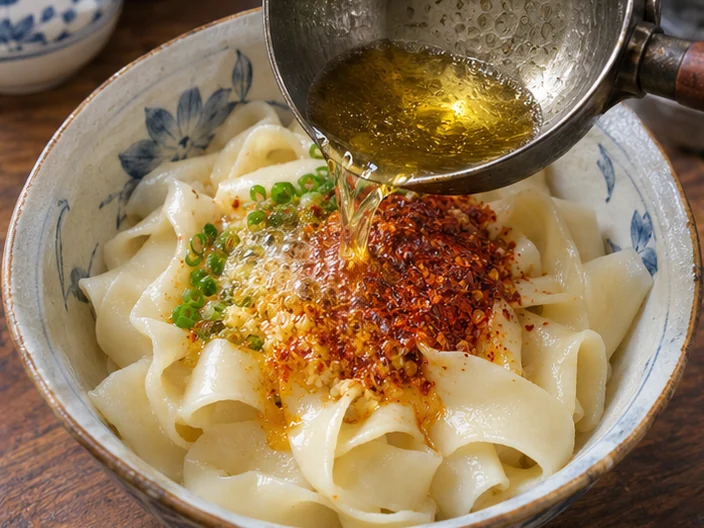
Turn off the stove before pouring the oil
- Put 30 mL oil in a small pouring pan, start around setting 5 and put on oven mitts.
- Turn off the stove when the oil moves easily and shimmers slightly. It must not smoke.
- With both hands, carry the pan close to the bowls and slowly pour half over each seasoning pile. Keep your face and hands away from above the bowl.
- Return the empty pan to the burner you just used, check that the stove is off and let it cool naturally.
Cook from this stepHow to tell you’re readyThe seasonings sizzle briefly and smell fragrant without oil splashing widely.
- AI illustration
Step 04
Mix from the bottom
- Wait for the sizzling to stop, then lift noodles from the bottom with chopsticks.
- Keep lifting and mixing until soy, vinegar and chilli oil coat most noodles.
- Taste a bite. If bland, add ½ tsp soy sauce. Add ½ tsp vinegar for more sharpness or a pinch of chilli for more heat, mixing and tasting after each addition. If too salty or too sour, divide in the plain noodles and greens reserved in the colander, then mix again.
- If you did not need the reserved noodles and greens for an adjustment, divide them between the bowls and eat them alongside.
Cook from this stepHow to tell you’re readyThe wide noodles look red and glossy, with garlic and scallion spread throughout.
The wide noodles are clumping and breaking when stirred. What should I do?
Stop stirring in circles. Lift a few strands from the edge with chopsticks and gently shake them apart, then work around the clump. If the water is very starchy, move them to fresh boiling water.
Drain when strands lift separately and a cooled bite has no hard centre. Broken noodles are still edible, so do not overcook them trying to restore their shape.
See the picture in step 1The garlic, scallion and chilli are scattered across the bowl, so the oil cannot hit them all. What should I do?
Do not heat the oil yet. Use a dry spoon to gather the seasonings gently into the centre and wipe any from the rim. Do not gather them by hand.
Heat the oil when the seasonings form one small central pile and you will not need to chase them around the rim while pouring.
See the picture in step 2The oil has started smoking. Should I pour it quickly?
Turn off the heat. Leave the pan in place until the smoke clears. Set the heatproof noodle bowl on a stable surface and keep your face and hands clear of the top. Wearing a dry oven mitt, use a dry, long-handled metal spoon to drip a little oil onto the edge of the chilli powder.
If it sizzles gently without blackening the chilli, use the spoon to add the oil a little at a time. The pan can stay on the stove. If the chilli turns black on contact, let the oil cool a little longer.
See the picture in step 3There is a pool of oil at the bottom and the noodles feel greasy. What can I do?
Mix in a small handful of cooked greens or half a portion of freshly cooked, unseasoned noodles. Add no more oil and leave excess oil in the bowl.
Stop adjusting when the noodles look glossy without dripping oil and a bite no longer coats your mouth with oil.
See the picture in step 4More help by step
- Step 1 · Cook the greens and noodles
- If the noodles stick, gently lift and separate them with chopsticks.
- Step 2 · Pile the seasonings on top
- Wet seasonings are edible but may spit when oil lands. Blot surface water with kitchen paper before continuing.
- Step 3 · Turn off the stove before pouring the oil
- If the oil smokes, do not pick up the pan. Turn off the stove and leave it in place until the smoke is gone and the surface has settled. Test one drop on the chilli. Pour slowly only if it sizzles gently without blackening at once.
- Step 4 · Mix from the bottom
- If oil pools at the bottom, mix in more greens or noodles and add no more oil.
Kitchen notes
Ask about a step or share how it turned out. Your comment will be public.
Loading comments…