Grated zucchini releases the water that loosens this simple batter. This is an approachable home version of Beijing hutazi, cooked thin enough to turn when the edges become golden.
Serves
2
Time
About 30 min
Level
Several stages
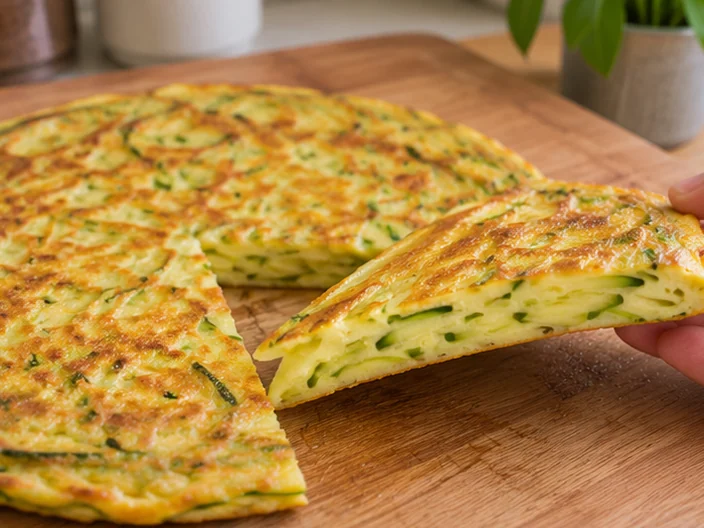
The finished dish · AI illustration
What you need
Tick off each ingredient as you set it out. The steps tell you when to taste a cooked dish and how to adjust the flavour.
How big is a teaspoon or tablespoon?
1 tsp is a 5 mL measuring spoon. 1 US tbsp is 15 mL, or 3 tsp. For flour or sugar, sweep the top level with the back of a knife.
Set these out first
You need a box grater, mixing bowl, chopsticks or whisk, frying pan, ladle, and spatula. When the zucchini becomes too short to hold safely, cut the last piece with a knife instead of bringing your fingers close to the grater.
How high should I turn the heat?
Keep a gas flame beneath the base of the pan, or start an electric stove at 4 out of 9. The batter should sizzle gently and the rim should brown slowly. Turn the heat down at once if it blackens quickly or smokes.
6 steps with pictures
AI illustration
Step 01
Grate the zucchini and let it release water
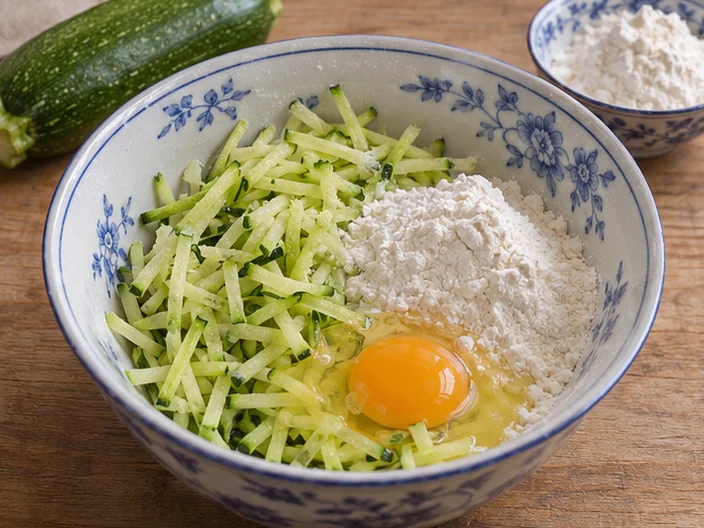
Rinse and trim the zucchini. Grate it into a large bowl on the coarse side of a box grater. Cut the last short piece into thin strips with a knife.
Add the salt, mix with chopsticks, and leave for 5 minutes.
When a little liquid collects at the bottom, loosen the strands with chopsticks. Keep the liquid rather than squeezing it out. Add the eggs and about two-thirds of the flour beside the zucchini, without mixing yet.
How to tell you’re readyThe zucchini has softened, a little liquid is visible, and the eggs and flour are in the bowl.
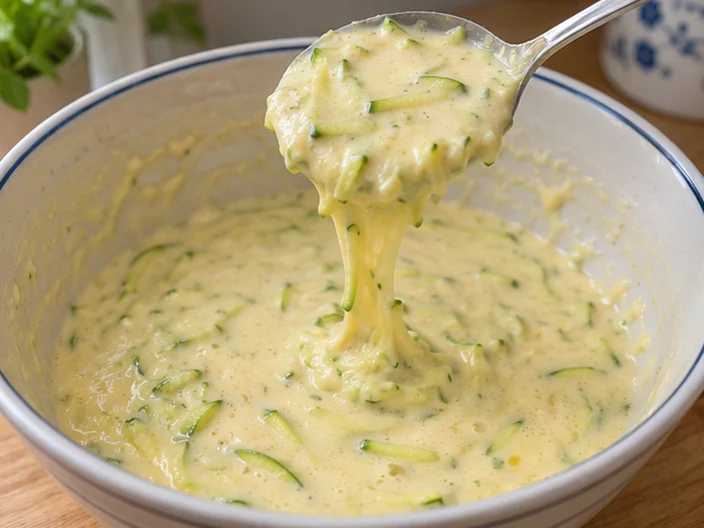
Mix the eggs, flour, and zucchini until no whole yolk or dry flour remains. Lift the chopsticks; the batter should fall in a soft clump with zucchini strands.
If it runs off like water, add the remaining flour one tablespoon at a time. If it is too stiff to stir, add water one tablespoon at a time. Mix completely before checking again.
How to tell you’re readyThe batter coats the zucchini and falls slowly from a spoon in a soft clump, with no white flour pockets.
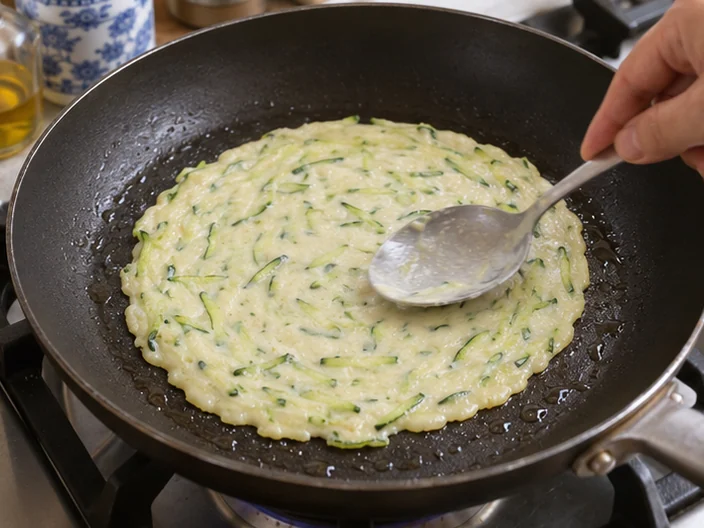
Film the pan with oil, then turn on the stove. Keep a gas flame beneath the pan or start electric at 4 out of 9. When a tiny drop of batter forms small bubbles, add about one-quarter of the batter.
Use the back of the ladle to push slowly from the centre out, spreading the first pancake into a round about 5 mm / ¼ inch thick.
How to tell you’re readyThe batter forms a fairly even round with green shreds spread through it and tiny bubbles beginning at the edge.
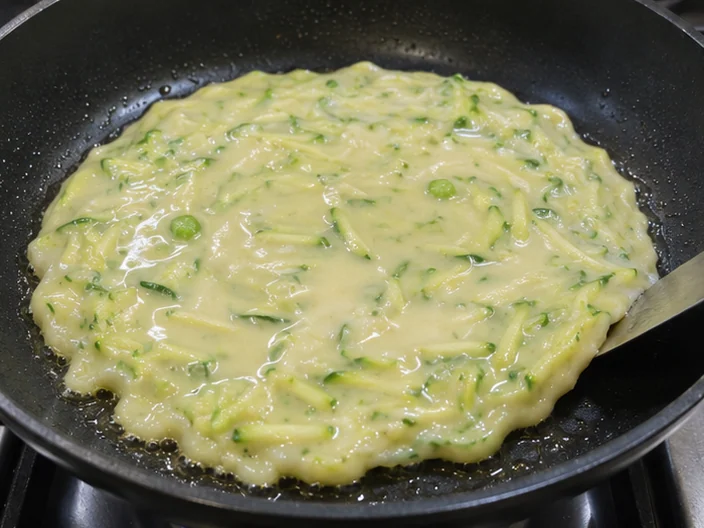
Wait 2–3 minutes. When most of the glossy wet batter on top has turned matte and the rim is golden, slide the spatula underneath and turn the whole pancake.
Cook the second side for about 2 minutes. Press the centre gently with the spatula. When no wet batter comes out, move it to a plate.
How to tell you’re readyBoth sides have golden patches, the pancake lifts in one piece, and the centre is set.
Compare the textureThe surface is still shiny and the soft edge gives way. Leave it for another 30 seconds before trying to turn it.Cook from this step
AI illustration
Step 05
Cut the first pancake and adjust the remaining batter
Cut the first pancake and check that the centre has no raw batter and the egg is fully set, then taste a small piece. If bland, mix one small pinch of salt into the remaining batter before cooking the next pancake. If it tastes right, continue as it is.
Cook the remaining batter the same way, waiting for a golden rim before turning each pancake.
How to tell you’re readyThe egg is set and the zucchini is tender at the cut face, with no white, sticky raw batter.
The batter was right but became runny while it sat. What should I do?
Zucchini keeps releasing water. Stir before the next pancake, then add 1 tablespoon flour. Check whether the batter falls in a clump with the shreds before adding a second spoonful.
Cook when it no longer pours like water and the batter and zucchini fall slowly from the spoon together.
My zucchini pancake falls apart as soon as I turn it. Is the batter wrong?
Stop turning it, push the loose edge back with the spatula and wait 30 seconds. When most of the top is no longer glossy and one spatula can support the centre, steady it with a second spatula and turn.
Complete the recipe’s full cooking on both sides and cut-open check before tasting even if it has broken. It will not become whole again, so serve the fully cooked pieces.
The edge is burnt but the centre is still wet. What now?
Lower the heat, move the pancake to the centre and cover for 1 minute. Uncover, turn it and cook for 30 seconds, then return to the recipe’s first-pancake cut-open check. Do not taste it before completing that step.
Burnt edges will not recover. After completing the recipe’s cooking and check, trim any bitter black rim and serve the rest.
The first pancake absorbed too much oil and tastes greasy. What can I do?
Rest the cooked pancake on a rack or paper towel so surface oil can drain. For the next one, brush only a thin film over the pan and add no oil to the batter.
Plate it when pressing the surface releases no oil and it does not drip when lifted. Oil already absorbed into the pancake cannot all be removed.
Do not taste raw batter. Add flour one tablespoon at a time if it runs like water, or water one tablespoon at a time if one stiff mass will not leave the spoon.
If the batter will not spread, dampen the back of the spoon rather than scraping hard. Move the pan off the heat and lower the setting if the rim blackens quickly.
If it tears when you try to turn it, wait another 30 seconds. If the bottom blackens quickly, move the pan off the heat briefly and lower the setting; spread the next pancake slightly thinner.
If the centre still contains wet batter, return the pancake to the pan. Shorten a gas flame so it touches only the base, or set electric to 2–3 out of 9. Cook 1 minute per side, then cut and check again.


 AI illustration
 AI illustration
 AI illustration
 AI illustration
 AI illustration
Kitchen notes
Ask about a step or share how it turned out. Your comment will be public.
Loading comments…