
Illustrated recipe
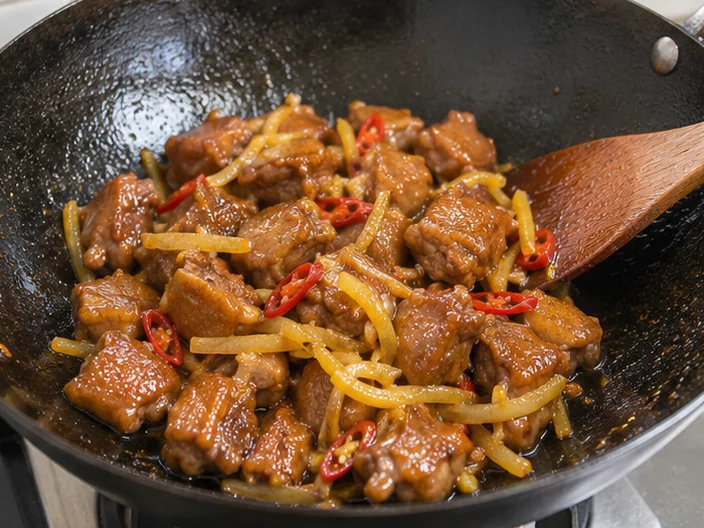
Guangxi Duck with Preserved Lemon
Salt-preserved lemon gives this Guangxi dish its bright flavour. Brown the skin to release duck fat, then add thin strips of peel just before serving.
What you need
Tick off each ingredient as you set it out. The steps tell you when to taste a cooked dish and how to adjust the flavour.
How big is a teaspoon or tablespoon?
1 tsp is a 5 mL measuring spoon. 1 US tbsp is 15 mL, or 3 tsp. For flour or sugar, sweep the top level with the back of a knife.
Set these out first
Use a lidded pan, spatula, board, knife and a heatproof bowl for the extra duck fat.
How high should I turn the heat?
Start skin-side down in a cold pan at around 4 on a 1–9 stove, or with a gas flame about halfway between low and high. Aim for a steady gentle sizzle and turn down if the pan smokes.
5 steps with pictures
-
 AI illustration
Step 01
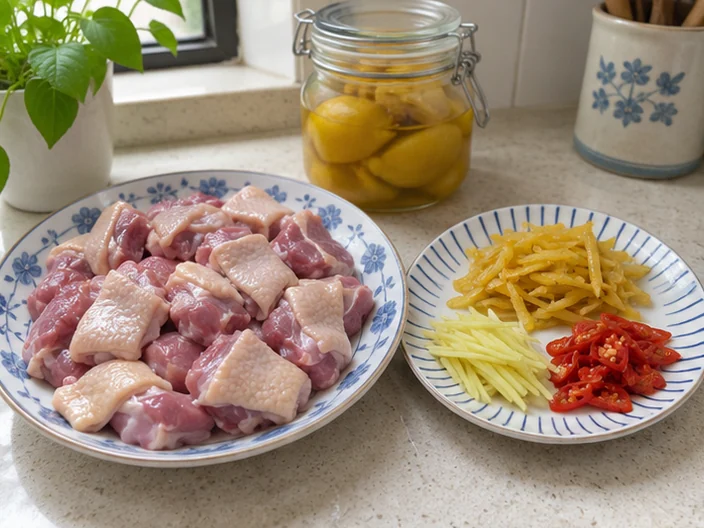
Prepare the duck and the lemon separately
- Remove the seeds and soft pulp. Taste a tiny piece of peel. If very salty, rinse briefly, pat dry and slice into fine strips.
- Prepare the ginger, garlic and chilli. On another board, pat the duck dry and cut into 3 cm (1¼ in) pieces, leaving skin on as many as possible.
- Plate the raw duck. Wash your hands, knife and duck board. Set aside a clean serving plate.
Cook from this stepHow to tell you’re readyThe skin is dry and the strips of peel are thin enough to eat in one bite.
-
 AI illustration
Step 02
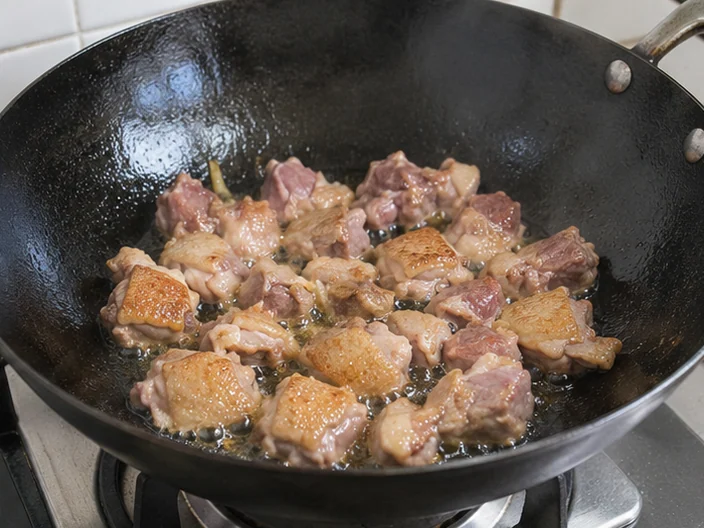
Let the skin release its fat
- Arrange the duck skin-side down in a cold skillet in one layer. Turn on the heat and leave it for about 5–8 minutes.
- Look for clear fat collecting on the bottom. Nudge one piece. Turn it once the skin releases easily.
- Brown the second side for 1–2 minutes. If a lot of fat collects, turn off the stove and spoon the excess into a heatproof bowl, leaving a thin film.
Cook from this stepHow to tell you’re readyThe skin has golden patches and you can see clear rendered fat.
-
 AI illustration
Step 03
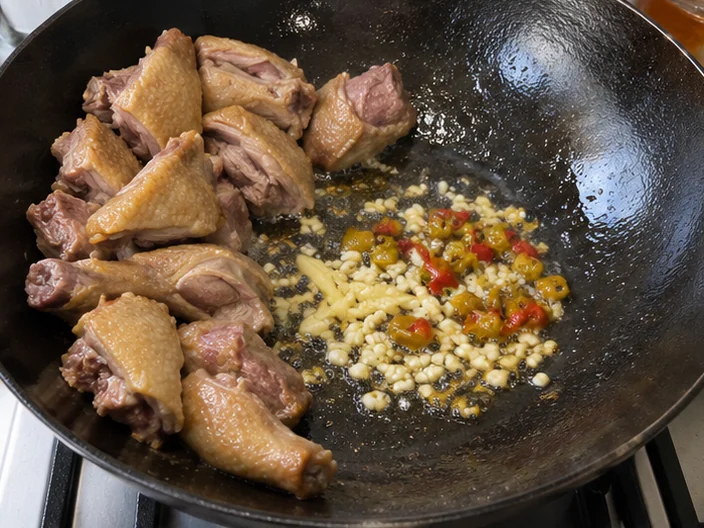
Cook the ginger, garlic and pickled chilli in the duck fat
- Push the duck to one side of the pan, leaving a clear space on the other side.
- If you turned off the stove, turn it back on until you hear a gentle sizzle. Add the ginger, garlic and pickled chilli to the exposed duck fat.
- Move the aromatics a few times. Continue immediately to the water in the next step once the garlic smells fragrant but has not blackened.
Cook from this stepHow to tell you’re readyThe aromatics look glossy and smell fragrant without blackened garlic.
-
 AI illustration
Step 04
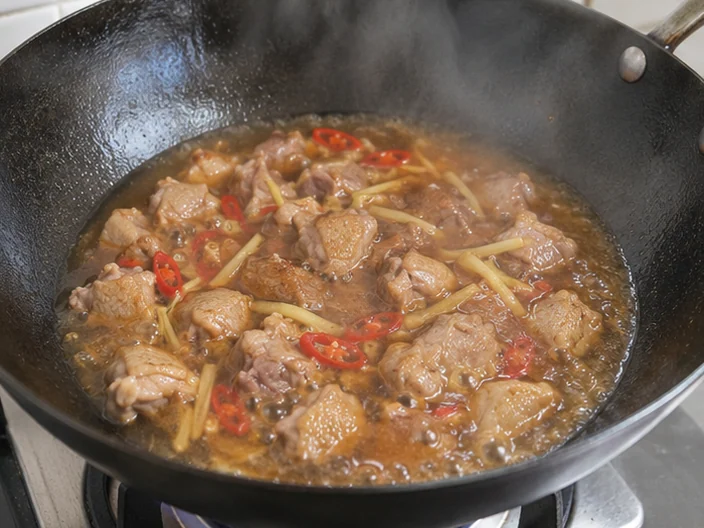
Cover and cook the duck until tender, then check the thickest pieces
- Add the water, ½ tsp soy and the sugar, reserving the remaining soy. Once bubbling, cover and turn down to a gentle simmer for about 15–25 minutes.
- Lift out two of the thickest pieces and cut through their centres with a clean knife. Look for steam inside, distinct cooked fibres, no glossy pink flesh and clear juices before moving on.
Cook from this stepHow to tell you’re readyThere is still a shallow pool of sauce and the fully cooked duck is easy to pierce.
- AI illustration
Step 05
Finish with the lemon peel
- Uncover and add half the peel. Turn the duck so the strips reach the sauce.
- After about a minute, take a little sauce and a cooked piece of duck with a clean spoon. Let them cool and taste together. For more lemon flavour, add two or three strips of peel, stir and taste again.
- Turn off the heat when the sauce clings lightly. Serve the duck with the ginger and peel.
Cook from this stepHow to tell you’re readyThin strips of peel are visible on the duck with a little sauce left for rice.
The duck skin is stuck and starts tearing when I push it. What should I do?
Do not force it. Leave it for another 30 seconds, then slide a thin spatula flat against the pan. If it still sticks, wait another 30 seconds.
Turn when the skin releases on its own, has golden patches underneath, and clear duck fat is visible in the pan.
See the picture in step 2The sauce is nearly dry but the duck is still tough. What now?
Turn off the stove, move the pan off the burner and wait until all sizzling stops. Keeping face and hands away, slowly add 3 tablespoons warm water beside the duck, then return the pan, cover and cook 5 minutes. Do not pour water onto a bare dry patch.
When a shallow pool returns and chopsticks enter the meat more easily, return to the recipe’s full cooking checks. Repeat the careful refill once if still tough; tenderness does not replace those checks.
See the picture in step 4I added too much preserved lemon and it tastes harsh and salty. What can I do?
Remove half the visible peel, add 2 tablespoons water and bring back to a bubble. Cool and taste a little sauce with a cooked piece of duck.
Turn off the stove when you can taste the duck and the sour-salty flavour no longer overwhelms the bite. Bitterness already cooked into the sauce cannot be fully removed; serve less sauce with plain rice.
See the picture in step 5More help by step
- Step 1 · Prepare the duck and the lemon separately
- If the duck slips, pat it dry again and halve the largest pieces first.
- Step 2 · Let the skin release its fat
- If the skin sticks firmly, leave it another half-minute before trying again.
- Step 3 · Cook the ginger, garlic and pickled chilli in the duck fat
- If the garlic darkens quickly, move the pan off the heat, add 2 tablespoons water to cool it and lower the setting.
- Step 4 · Cover and cook the duck until tender, then check the thickest pieces
- If the middle still looks raw or the meat feels tough, return it to the pan. Cover and simmer for another 3–5 minutes, then open another piece. Add a few spoonfuls of water if the sauce is drying out.
- Step 5 · Finish with the lemon peel
- If the preserved lemon overpowers the duck, lift out a few strips and add two spoonfuls of water. Bring back to a bubble and taste. If the tang is right but it needs salt, add a few drops of soy sauce.
Kitchen notes
Ask about a step or share how it turned out. Your comment will be public.
Loading comments…