
Illustrated recipe
Liuzhou Luosifen with Home-Simmered Broth
This home version starts with pork-bone broth, then adds packaged snail meat clearly labelled fully cooked or ready to eat. Ready-made pickled bamboo shoots, dried rice noodles, peanuts and fried yuba keep the project manageable. Ingredients vary, so this is a practical home bowl rather than a claim to a noodle shop’s formula.
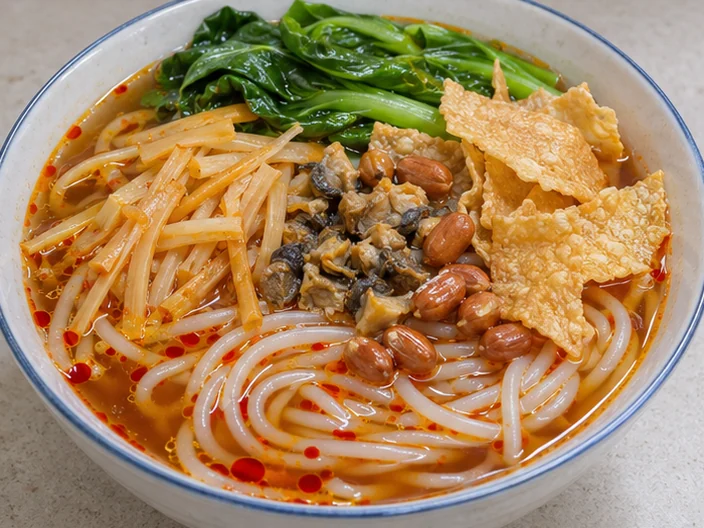
What you need
Tick off each ingredient as you set it out. The steps tell you when to taste a cooked dish and how to adjust the flavour.
How big is a teaspoon or tablespoon?
1 tsp is a 5 mL measuring spoon. 1 US tbsp is 15 mL, or 3 tsp. For flour or sugar, sweep the top level with the back of a knife.
Set these out first
Set out a roughly 5 L lidded stockpot, a small skillet, a pot for the noodles, a strainer, a ladle and tongs. Use a heatproof bowl for the foam, two small dry bowls for the peanuts and fried yuba, four large serving bowls, and a clean plate for the cooked pork.
How high should I turn the heat?
Bring the stock to a full bubble first, then lower the heat until small bubbles continue across the surface. Keep a gas flame beneath the pot. On a 1–9 electric stove, start near 8 and reduce to 2 or 3 after it boils. If the liquid rises quickly, lower the heat and remove the lid.
8 steps with pictures
-
 AI illustration
Step 01
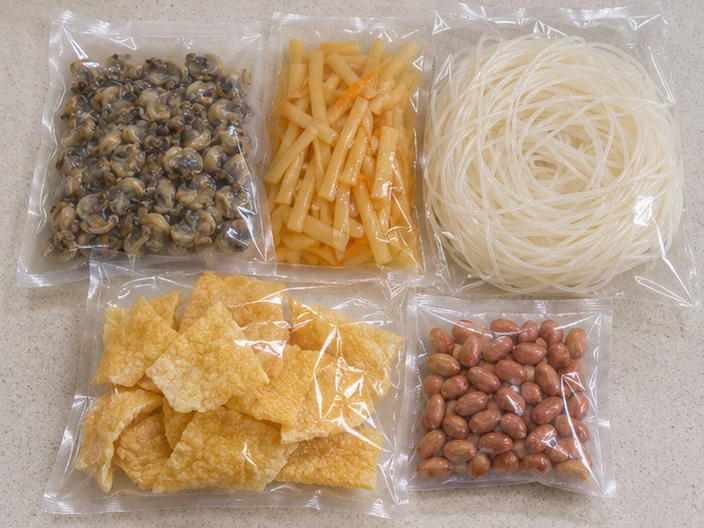
Check the snail meat and topping packets first
- Read the snail meat label first. It must clearly say fully cooked or ready to eat. Return chilled packs to the refrigerator until step 4.
- Use properly packaged bamboo shoots and pickled beans. Discard a swollen or leaking pack, or one that smells spoiled after opening.
- Put peanuts and fried yuba in separate dry bowls and cover them for later. Read the noodle packet and note whether soaking is required and how long it cooks.
Cook from this stepHow to tell you’re readyThe packaged ingredients have clear directions, the crisp toppings are dry and the noodle directions have been checked.
-
 AI illustration
Step 02
Start the pork in cold water and skim the foam
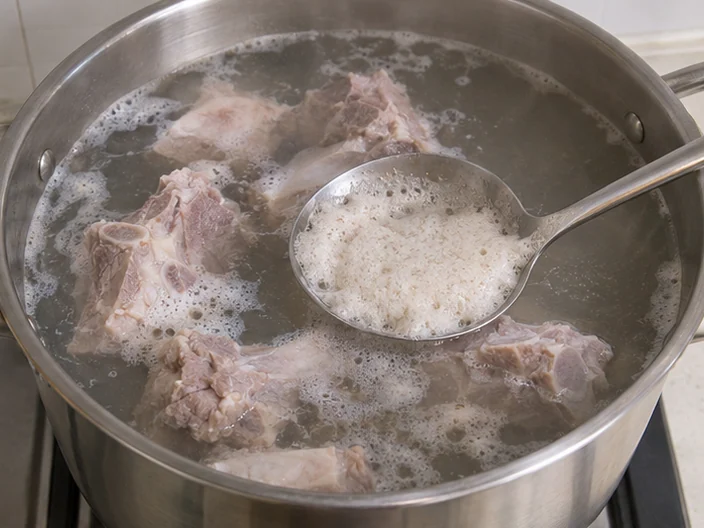
- Place the unwashed raw pork bones directly in the stockpot and add 2.5 L / 10½ cups cold water. Wash hands, tongs and surfaces that touched raw pork.
- Cover and bring to a full bubble. When grey-white foam gathers, remove the lid and lower the heat while keeping small bubbles going.
- Skim the foam slowly into a heatproof bowl. Stop when no large grey patches remain; there is no need to remove every spot of fat.
Cook from this stepHow to tell you’re readySmall bubbles and a little fat remain, but no large grey foam covers the surface and the stock is not rising out of the pot.
-
 AI illustration
Step 03
Add ginger and scallion and keep the stock gently bubbling
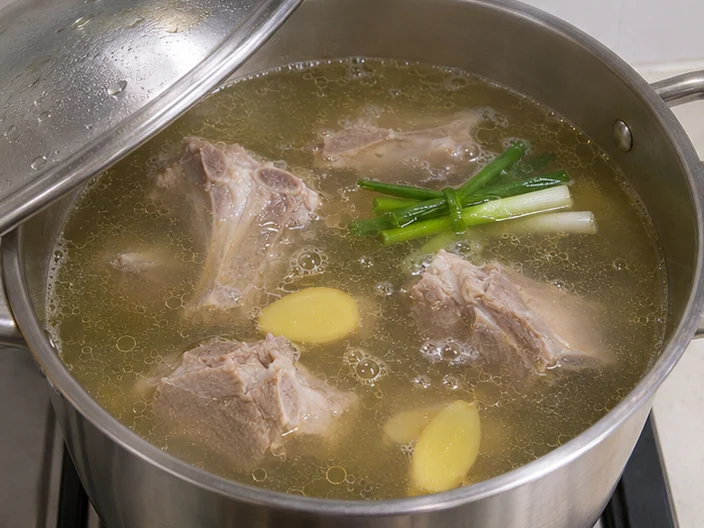
- Add sliced ginger and scallion whites. Leave the lid slightly open and keep small bubbles rising without a hard boil.
- Start timing when small bubbles return and keep the stock gently bubbling for 2 hours. Check every 30 minutes. If the bones poke out, add just enough boiling water to cover them again. If the bubbling stops as you top up, resume timing once it returns.
- After a full 2 hours of continuous gentle bubbling, move the largest meaty bone to a clean plate. Pull at the thickest meat beside the bone with a fork. When it separates easily and steams throughout, remove the remaining bones. Pull off and cover the cooked meat if you want it in the bowls.
Cook from this stepHow to tell you’re readyThe stock is pale brown after 2 full hours of gentle bubbling, and meat beside the largest bone separates easily with a fork and steams throughout.
-
 AI illustration
Step 04
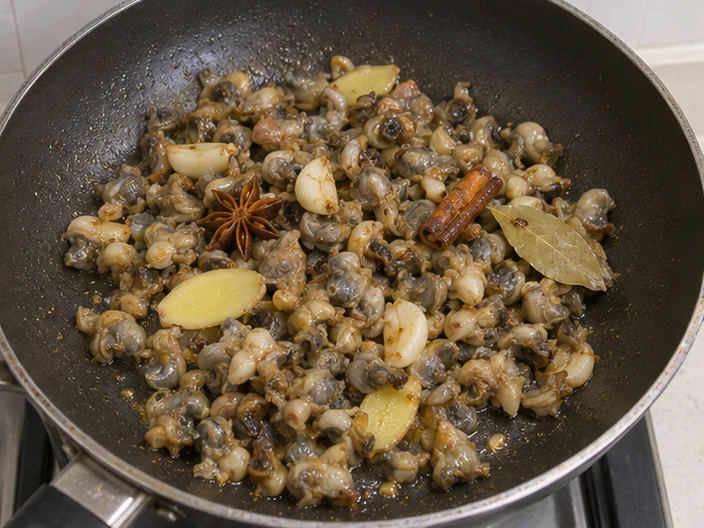
Briefly cook the fully cooked snail meat with a few spices
- After removing the pork bones, open the fully cooked snail meat and drain only if the packet directs. Discard it if it smells spoiled rather than trying to cover the smell with spices.
- Add oil to the skillet, then turn on the stove. Keep gas beneath the pan or use 3–4 out of 9 on electric. Add ginger, garlic, star anise, cinnamon, bay and optional chilli, moving them for about 20 seconds.
- Add the fully cooked snail meat and turn gently for about 1 minute. Turn off the stove when it looks hot and glossy and the garlic has not blackened.
Cook from this stepHow to tell you’re readyThe cooked snail meat looks glossy, the aromatics smell fragrant and the pan is not blackened.
-
 AI illustration
Step 05
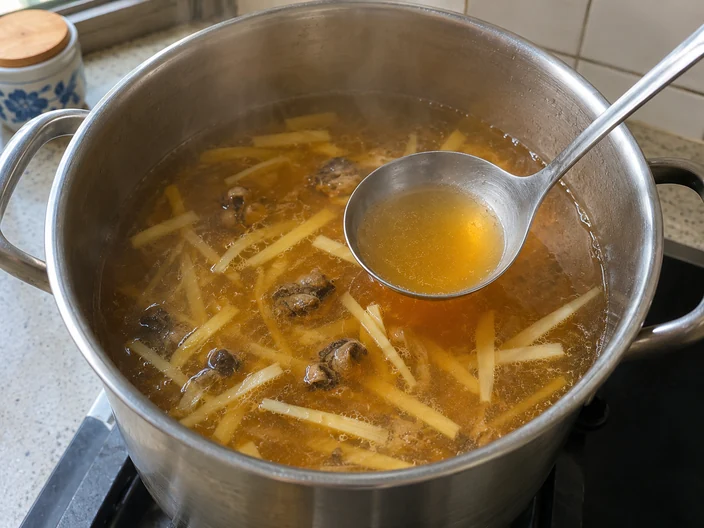
Add the snail meat to the stock and taste after simmering
- Scrape the cooked snail meat, spices and oil into the stock. Add half the bamboo shoots and 15 mL / 1 tablespoon soy sauce, then return it to a bubble.
- Lower to continuous small bubbles and cook with the lid ajar for 20 minutes. Remove the star anise, cinnamon and bay afterward so they do not end up in the bowls.
- Cool and taste a clean spoonful. If bland, add soy sauce 1 teaspoon at a time. For more tang, add vinegar 1 teaspoon at a time. If sharply sour, add ½ teaspoon sugar. Return to a bubble and taste after every change.
- If already salty, add half a bowl of boiling water, stir, return to a bubble and taste again. Do not try to hide excess salt with sugar or chilli oil.
Cook from this stepHow to tell you’re readyThe broth is clear reddish brown, the cooked snail meat and bamboo are hot, and its sour, savoury and salty balance has been tasted.
-
 AI illustration
Step 06
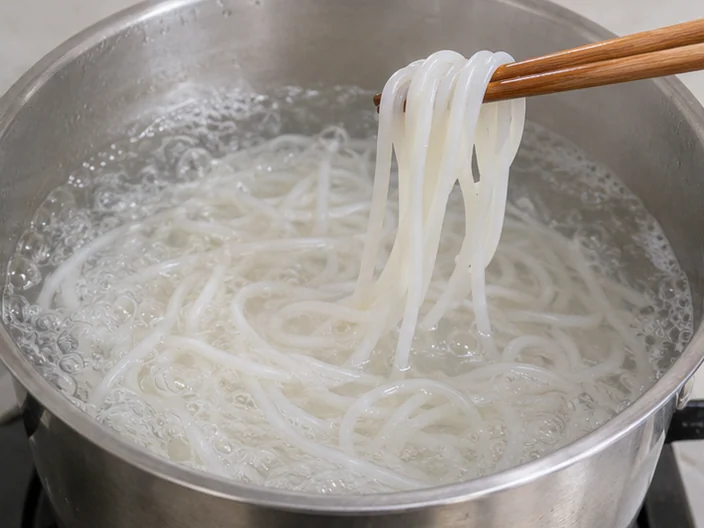
Cook the rice noodles until no hard centre remains
- If the packet requires soaking, soak and drain as directed. Bring a separate large pan of water to a full boil before adding the noodles.
- Separate at once with chopsticks. Follow the packet time and lift one noodle 1 minute early, cooling it before biting through.
- When there is no dry white core and the noodle bends with a little spring rather than hardness, turn off the stove and drain. Shake gently until water no longer runs in a stream.
Cook from this stepHow to tell you’re readyThe noodles are separate and flexible, with no dry white core and no stream of water below the strainer.
-
 AI illustration
Step 07
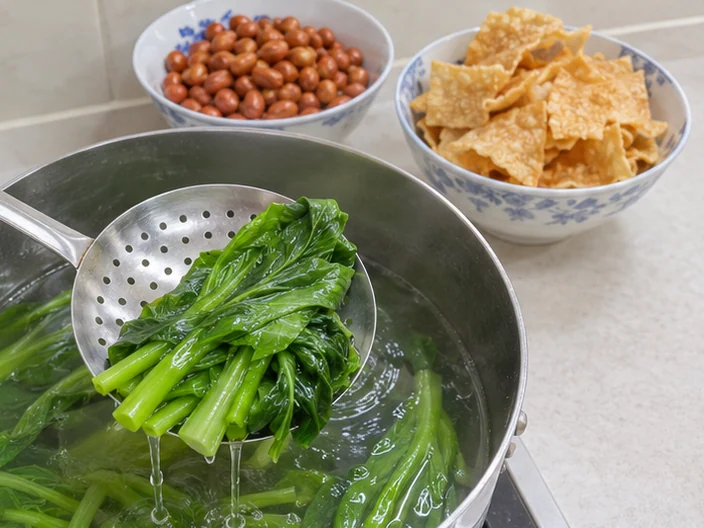
Brighten the greens and briefly warm the remaining bamboo
- Return the noodle water to a boil. Add thick stems for 30 seconds, then press in the leaves. Lift them out when bright green and the stems bite through.
- Check that the snail broth still has small bubbles. If the bamboo is not too salty, add the rest with the pickled beans and heat for 1 minute.
- If using the cooked pork from the bones, add it now and return the broth to a bubble. Keep peanuts and fried yuba dry rather than soaking them early.
Cook from this stepHow to tell you’re readyThe greens are bright, the bamboo, beans and cooked pork are hot, and the peanuts and yuba remain dry and crisp.
- AI illustration
Step 08
Add noodles and greens, then broth and crisp toppings
- Divide the noodles among 4 large bowls. Add greens and cooked pork, then ladle in cooked snail meat, bamboo, pickled beans and hot broth.
- Finish each bowl with peanuts, fried yuba and scallion greens. Add a little chilli oil only to individual bowls, tasting before adding more.
- Taste a noodle with broth. If salty, add 2 tablespoons boiling water to that bowl. For more tang, add a few drops of vinegar. If too sour, add plain noodles or unseasoned hot stock. Stir and taste after each change.
Cook from this stepHow to tell you’re readyThe noodles lift separately in clear reddish-brown broth with bamboo and cooked snail meat, while peanuts and fried yuba sit on top.
There is a thick layer of fat on the pork stock. Will the bowl be greasy?
After removing the bones, leave the stock for 2 minutes so the fat gathers. Spoon off part of it, leaving a few small droplets for flavour without removing ladlefuls of stock.
Cool and taste one spoonful. Add the snail meat when it no longer leaves a heavy film on the lips and a few fat droplets still remain.
See the picture in step 3The drained noodles clumped together and will not separate. What should I do?
Put them in a clean strainer, dip into boiling water for 5–10 seconds and gently separate with chopsticks, then drain again at once. Do not oil them because the broth will not cling as well.
Divide them immediately when small bundles lift separately and water no longer streams from the strainer. Broken noodles will not join again.
See the picture in step 6Everything is assembled but the broth and noodles are lukewarm by serving time. What now?
Lift the peanuts and fried yuba back into a dry bowl, leaving the noodles in their bowls. Return broth and snail meat to the pot, bring back to a bubble, ladle over the noodles, then replace the crisp toppings.
Serve as soon as steam rises from both the bowl and lifted noodles. If the noodles are already soft, do not simmer them in the reheating broth.
See the picture in step 8More help by step
- Step 1 · Check the snail meat and topping packets first
- If the snails are raw, live or unlabelled, get a pack clearly marked fully cooked before starting. If you have a noodle kit instead, follow the packaged version linked above.
- Step 2 · Start the pork in cold water and skim the foam
- If the stock rises, lower the heat at once and move the pot off the burner briefly until it settles. Do not pour cold water into the hot pot to stop the foam.
- Step 3 · Add ginger and scallion and keep the stock gently bubbling
- If the meat beside the bone is still firm and will not pull apart, return it to the gently bubbling stock and check again every 15 minutes. Do not salt a mild stock yet because snail meat and bamboo shoots are still to come.
- Step 4 · Briefly cook the fully cooked snail meat with a few spices
- If the garlic starts darkening too fast, turn the heat off and leave the skillet on a stable surface. If it turns black and smells burnt, leave that batch out of the broth. Let the pan and oil cool before cleaning it and starting again with fresh oil and aromatics over lower heat.
- Step 5 · Add the snail meat to the stock and taste after simmering
- If spice dominates, remove the whole spices early and add more boiling water and stock, then cook 5 minutes. If the bamboo is very salty, do not add the remaining half later.
- Step 6 · Cook the rice noodles until no hard centre remains
- If the centre is hard, return the noodles to boiling water and check every 30 seconds. Over-soft noodles are still usable; cook 1 minute less next time.
- Step 7 · Brighten the greens and briefly warm the remaining bamboo
- If a stem will not bite through, return the greens for another 30 seconds. If the broth is already salty, leave out the remaining bamboo and beans.
- Step 8 · Add noodles and greens, then broth and crisp toppings
- Softened toppings are still edible; next time add them a little at a time. Divide leftover broth into shallow containers and refrigerate within 2 hours of cooking.
Kitchen notes
Ask about a step or share how it turned out. Your comment will be public.
Loading comments…