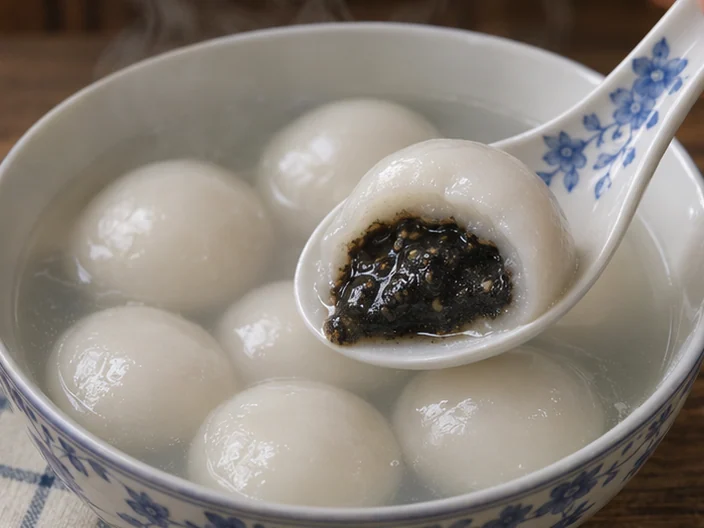
Traditional Ningbo tangyuan wrap a black sesame, sugar, and lard filling in water-milled glutinous rice flour. This small home batch uses roasted black sesame powder and butter, so the aroma will differ from the traditional lard version.
Serves
3
Time
About 50 min
Level
Several stages
The finished dish · AI illustration
What you need
Tick off each ingredient as you set it out. The steps tell you when to taste a cooked dish and how to adjust the flavour.
How big is a teaspoon or tablespoon?
1 tsp is a 5 mL measuring spoon. 1 US tbsp is 15 mL, or 3 tsp. For flour or sugar, sweep the top level with the back of a knife.
You need a large bowl, small bowl, saucepan, slotted spoon, chopsticks, and two plates. Raw glutinous rice flour is not ready to eat, so do not taste the dough.
How high should I turn the heat?
Bring the water to a full boil before adding the tangyuan, then reduce to steady small bubbles so they do not knock against one another. Keep gas flames under the pan, or reduce an electric stove from 6 to 3 or 4 out of 9.
8 steps with pictures
AI illustration
Step 01
Press the sesame filling together
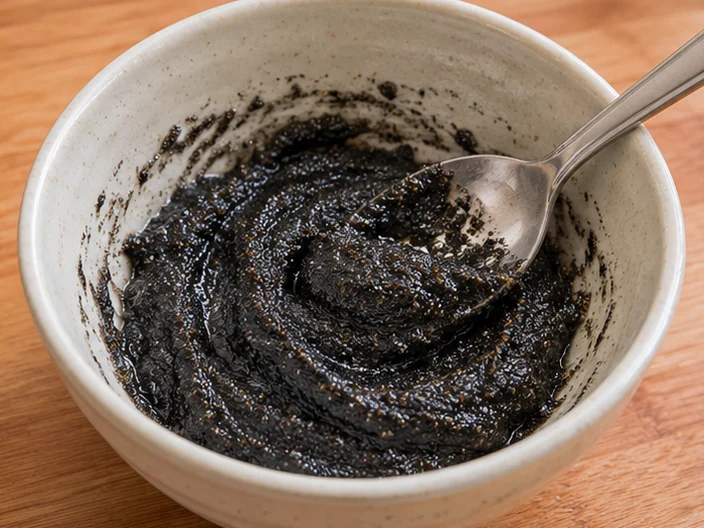
Press and mix the roasted black sesame powder, sugar, and softened butter with the back of a spoon.
Stop when there are no pale butter lumps and a pinch holds together. If you want to check the sweetness, use a clean spoon now, before the filling touches any raw rice flour.
How to tell you’re readyThe filling is evenly dark and moist, holds the marks from the spoon, and shows no pale butter lumps.
Put the glutinous rice flour in a large bowl. Add 100 mL warm water and stir into damp clumps.
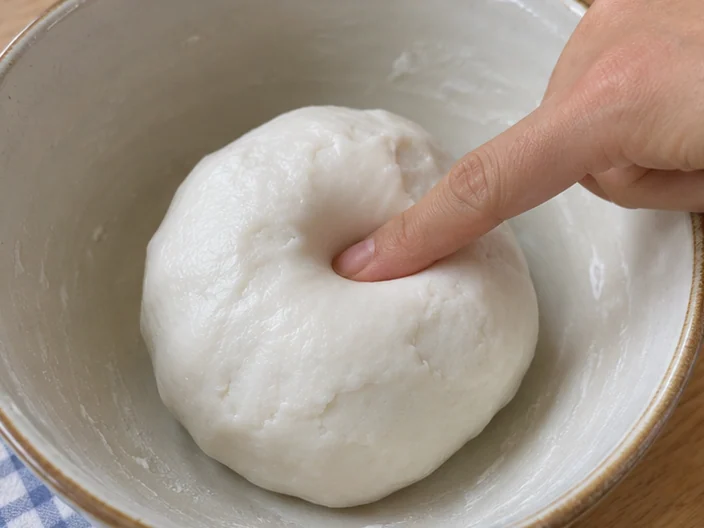
With clean, dry hands, press the clumps together. Add the remaining water 1 teaspoon at a time, kneading before deciding whether it needs more.
Stop when the dough feels like soft modelling clay, holds under pressure, and shows very few edge cracks. Cover with an upturned bowl and rest 5 minutes.
How to tell you’re readyThe dough forms one piece, keeps a shallow fingertip dent, and does not fall apart into damp crumbs.
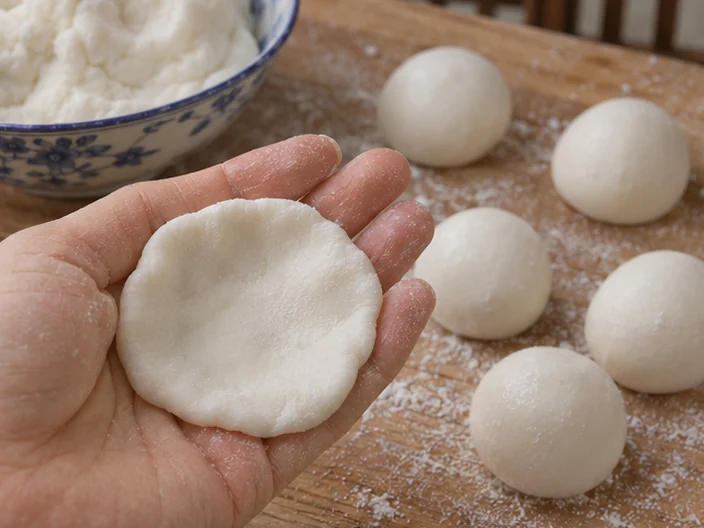
Divide the dough into 12 pieces. Roll each into a smooth ball and keep the rest covered.
Press one ball in your palm with the other thumb, then thin the rim gently to make a cup with a thicker centre. Do not taste raw dough.
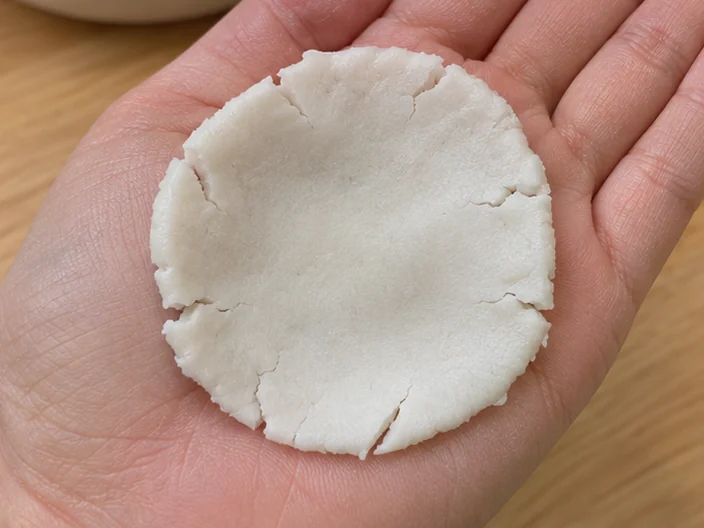
How to tell you’re readyThe dough is soft without coating the hands, and the discs have no large cracks around the edge.
Compare the textureFine hairline cracks are workable. If the rim splits deeply like this, knead in a few drops of water before dividing the dough.Cook from this step
AI illustration
Step 05
Add the filling and gather the dough
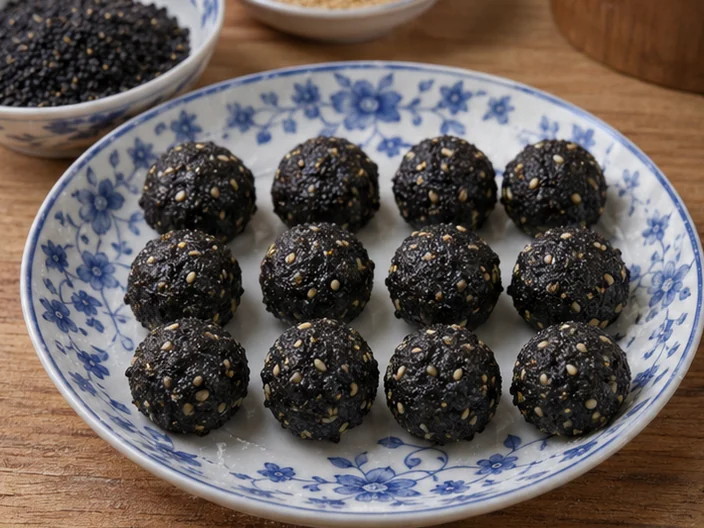
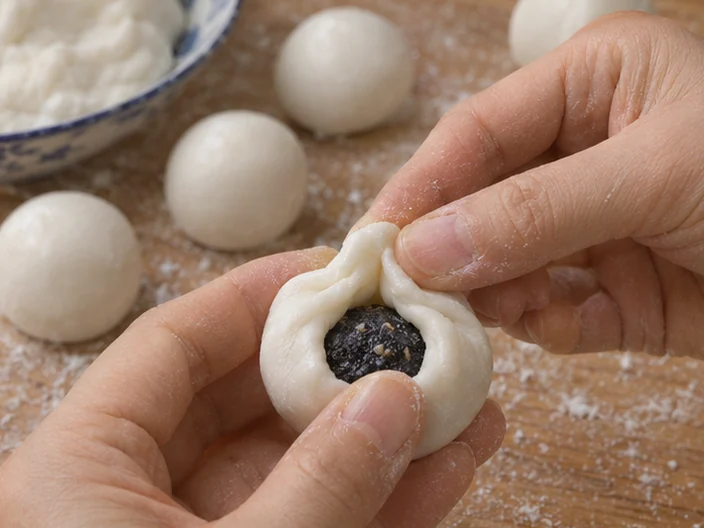
Place one chilled sesame ball in the centre of a dough disc. Lift and pinch two opposite edges together.
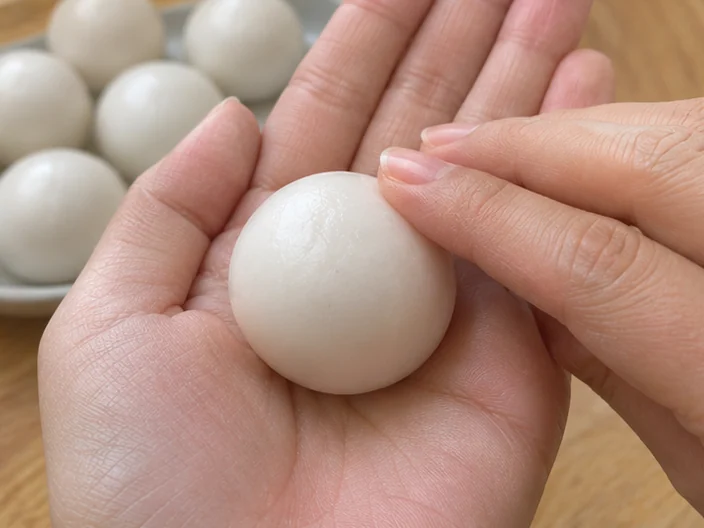
Support the bottom with one hand. Make a circle with the thumb and forefinger of your other hand. Gently squeeze and turn the dough so its edges slowly meet over the filling.
How to tell you’re readyThe dough surrounds the filling evenly, leaving one small opening at the top, with no black filling squeezing through the sides.
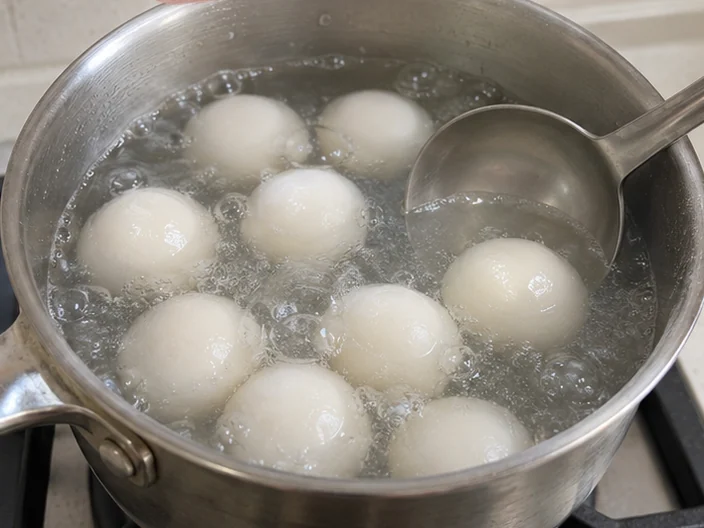
Bring about 1.2 L / 5 cups water to a full boil. Lower in the tangyuan one at a time and immediately sweep a spoon slowly across the base so they do not stick. If they are too crowded to move separately, cook only 6 and keep the rest covered for a second batch.
When the water bubbles again, reduce to steady small bubbles. Once every tangyuan floats, cook 2 minutes more, moving them gently once or twice.
How to tell you’re readyEvery tangyuan floats, looks glossy white and slightly larger, while the water bubbles steadily without a violent boil.
Lift one into a bowl and split it with a spoon. When the wrapper is soft all the way through with no dry white core and the sesame filling is hot, remove the rest.
Lift them out once the check is passed. If cooking in two batches, bring the water back to a full boil, cook the remaining tangyuan as in step 7, and split one from that batch to check it too. When all are ready, place 3 in each bowl with a little cooking water. The filling will be very hot, so split one with a spoon and let it cool slightly before eating.
How to tell you’re readyThe tangyuan float, look glossy white and slightly larger, with no dry flour inside and a thick black sesame centre.
The wrapper edge cracks whenever I press it. How can it hold the filling?
Roll that wrapper back into a ball. Rub a few drops of water over the cracks and knead until the surface has no dry lines. Press a new cup with a thicker centre and only gently thin the rim.
Add the filling when the raised edge shows only fine lines and no cracks open into gaps. If it still splits, add a few more drops rather than a spoonful of water.
The filled tangyuan are flattening and feel very soft. What should I do?
Chill the whole tray for 10 minutes so the butter filling firms again. Gently round them once after chilling rather than warming them with repeated handling.
Boil them as soon as they hold their shape and the base does not sag when lifted. Set aside and rewrap any one that remains soft.
One tangyuan leaked in the pot. What should I do with the rest?
Lift out and discard the split one, then strain loose black sesame from the water. Lower the heat to steady small bubbles and keep the remaining dumplings apart.
When no large pieces of filling float in the water, complete the recipe’s full cooking and cut-open check for the remaining tangyuan. Do not eat the broken one lifted early because its wrapper may be undercooked.
The wrappers are thick and the filling seems small. Can I improve this batch?
Split each cooked tangyuan in half with a spoon and eat it with a little hot cooking water rather than boiling it longer. Serve any spare cooked sesame filling at the side if available.
A cooked thick wrapper cannot be made thin. It is ready to eat when the cut has no dry flour and the wrapper bites through easily.
If the edge cracks immediately, wet your fingertips with a few drops of water and knead again. If sticky, add 1 teaspoon rice flour rather than a large amount.
Patch a tiny exposed spot with a fingernail-sized piece of dough and one drop of water. If there are many cracks, remove the filling, moisten and knead the dough, then try again.
If one sticks, do not scrape hard. Slide the back of a spoon slowly along the base. Lower the heat one step if the water boils hard enough to knock the dumplings together.
If the wrapper has a dry core, return it to gently bubbling water for 1 minute and check another. Remove a split tangyuan and strain loose filling from the water so it does not coat the others.

 AI illustration
 AI illustration
 AI illustration
 AI illustration
 AI illustration
 AI illustration
 AI illustration
Kitchen notes
Ask about a step or share how it turned out. Your comment will be public.
Loading comments…