
A picture guide to the Chinese grocery
What to look for on the packet, where to look in the shop, and which kind to bring home for your recipe.
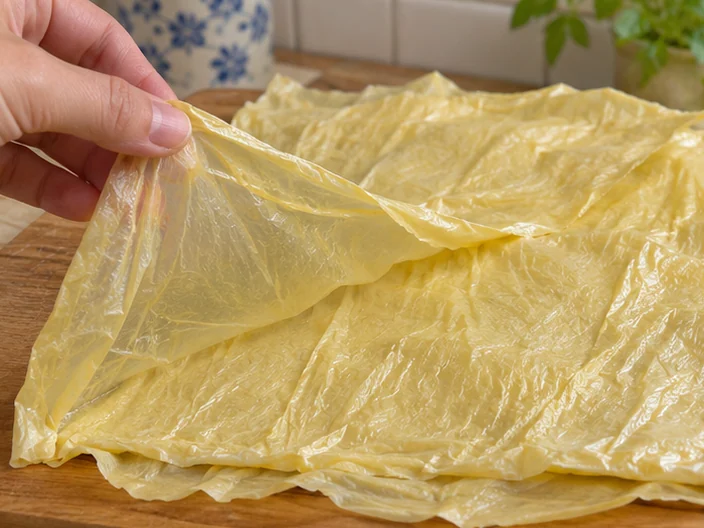
Thin yuba sheets
On the packet
Yuba sheets / bean curd skin sheets · 腐皮 / 油豆皮
Look in the tofu fridge or freezer for wide, pale yellow sheets with slightly wrinkled edges. Follow the packet to thaw frozen sheets before unfolding them.
For the roast-goose rolls, you need a sheet wide enough to fold. Dried sticks, narrow ribbons and thick pressed tofu sheets will not make those layers.
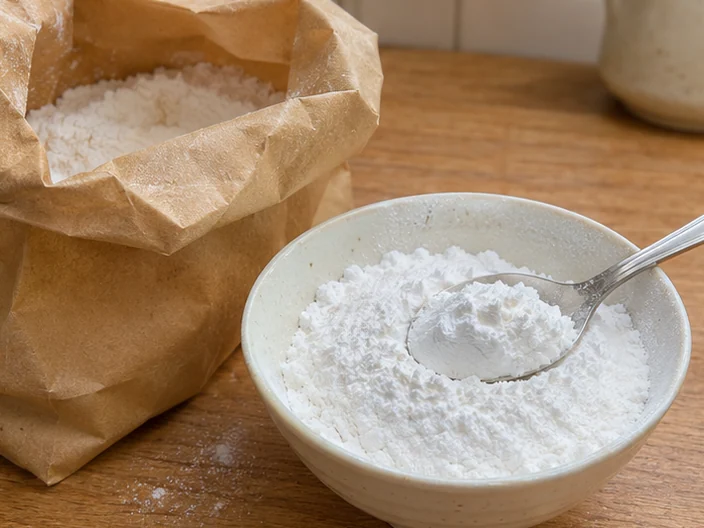
Glutinous rice flour
On the packet
Glutinous rice flour / sweet rice flour · 糯米粉
Check the flour shelf in an Asian grocery. Both kinds look white, so read the bag for “glutinous rice flour” or “sweet rice flour”.
For tangyuan or Beijing rice rolls, choose plain flour made only from sticky rice. “Sweet rice” is the grain’s name. Ordinary rice flour will not give either wrapper the same soft, sticky texture.
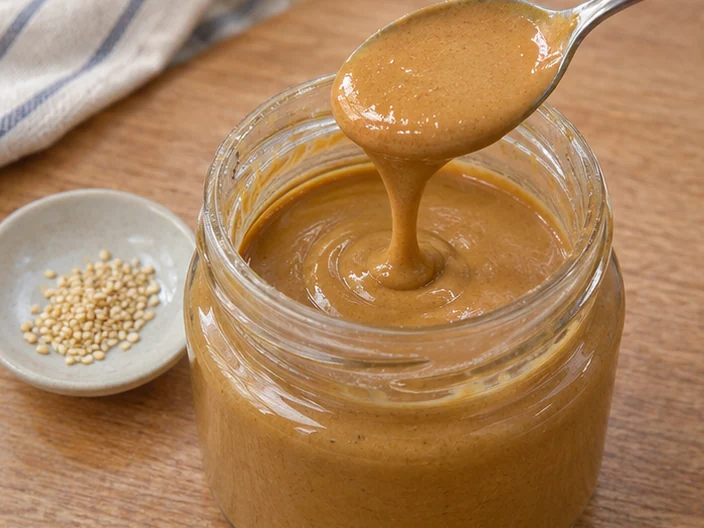
Chinese sesame paste
On the packet
Chinese sesame paste / roasted sesame paste · 芝麻酱
Look near the Chinese sauces for a tan paste made from roasted sesame seeds. If oil has risen to the top, stir all the way down to the bottom before spooning it out.
For Wuhan noodles the paste coats the strands. Toasted sesame oil adds aroma but cannot give the sauce its body.
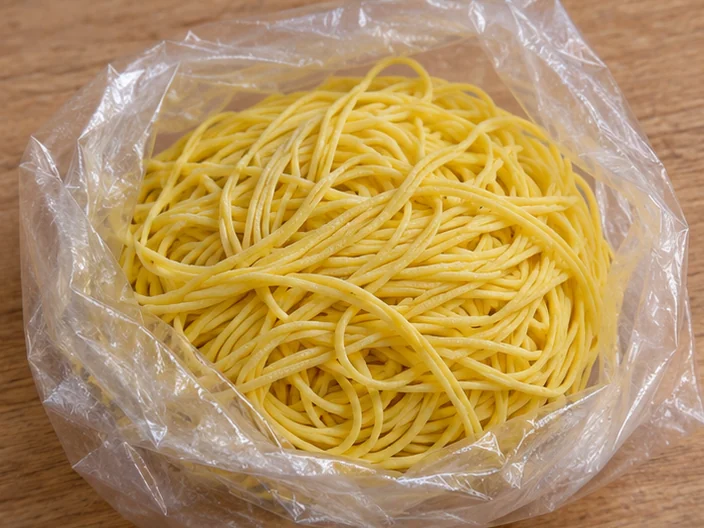
Fresh alkaline wheat noodles
On the packet
Alkaline wheat noodles / fresh alkaline noodles · 碱水面
Check the chilled noodle case for thin, round wheat noodles labelled alkaline. The ingredients may list sodium carbonate or potassium carbonate. Check whether they need boiling.
If you can only find plain wheat noodles, use their own cooking time. They will be softer but will still take the sesame sauce.
Fermented black beans
On the packet
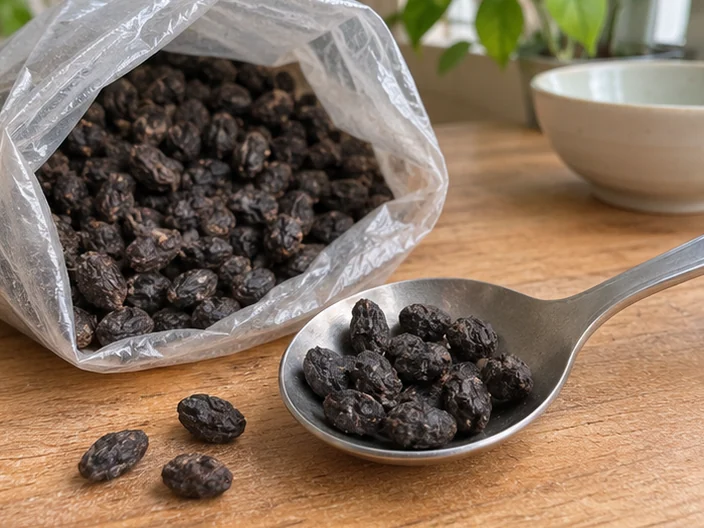
Fermented black beans / salted black beans / douchi · 豆豉
Look in the dried goods or seasoning aisle for a pouch or tub of wrinkled black beans. Roughly chop them before mixing with the ribs.
Read the label for “fermented” or “salted”. Canned black beans in water are much larger and lack the salty fermented flavour the ribs need.
Sichuan chilli bean paste
On the packet
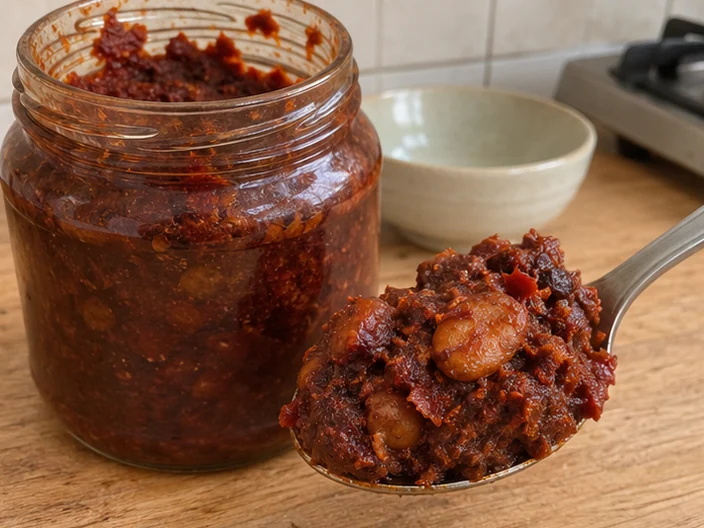
Pixian doubanjiang / chilli broad bean paste · 郫县豆瓣酱
Look with Sichuan seasonings for a thick reddish-brown paste. Check the ingredients for chillies and broad beans (fava beans). Chop any large pieces on a board.
Saltiness varies by brand. Start with the amount in the recipe and taste the sauce after the tofu has cooked in it.
Plain starch jelly
On the packet
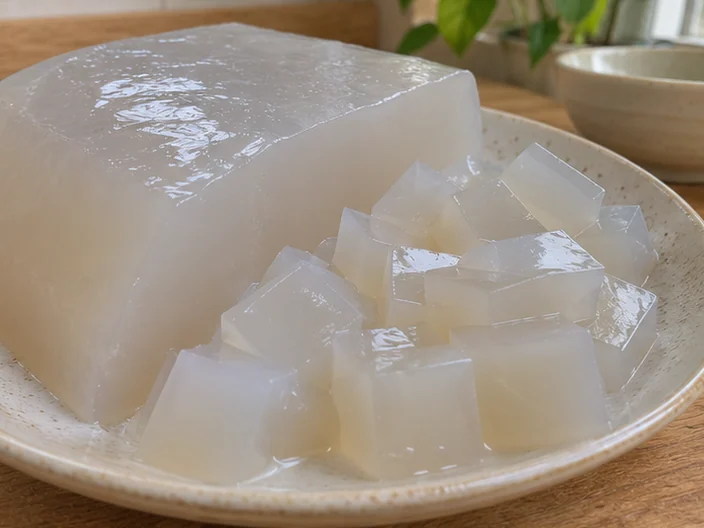
Mung bean jelly / sweet potato starch jelly · 凉粉
In the chilled section, look for a plain, unsweetened block made from mung bean or sweet potato starch. It should wobble a little but hold its shape when cut.
For the Kaifeng dish, buy the ready-made block. A bag of starch powder, dried glass noodles or sweet black grass jelly will need a different recipe.
Plain steamed wheat buns
On the packet
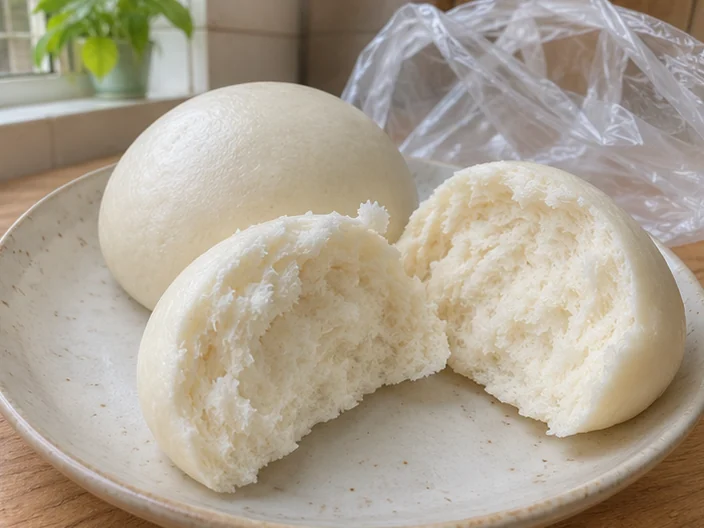
Plain steamed buns / mantou · 原味馒头
Look in the bakery fridge or freezer for plain white Chinese steamed buns with no filling. The cut face should show an even, fine crumb.
For frozen buns, follow the packet to heat them through. Let them cool until comfortable to hold before cutting into cubes.