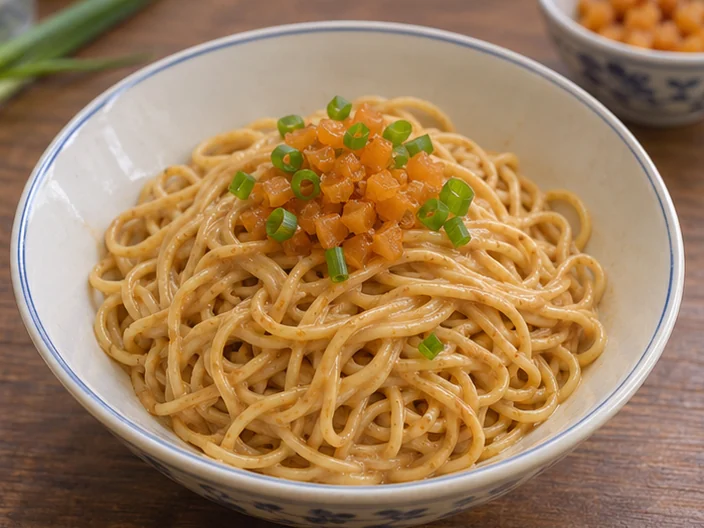
Wuhan hot dry noodles pair springy alkaline wheat noodles with sesame paste. This home version uses packaged alkaline noodles cooked as directed and mixed while hot. There is no need to half-cook, oil, and cool the noodles first.
Serves
2
Time
About 20 min
Level
Easy start
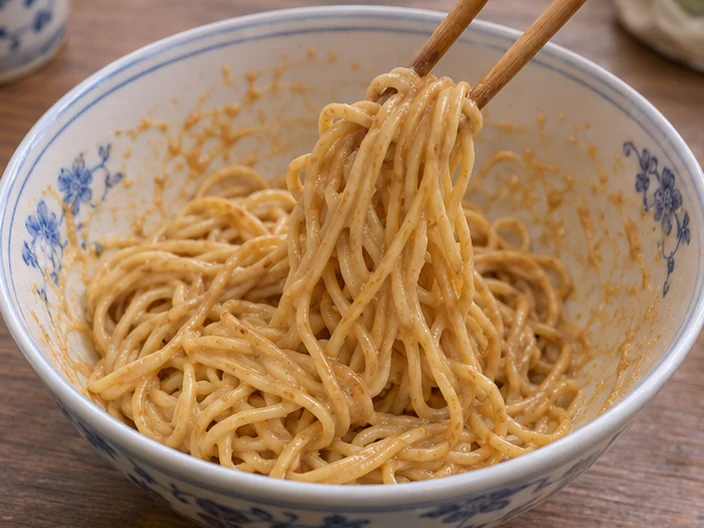
The finished dish · AI illustration
What you need
Tick off each ingredient as you set it out. The steps tell you when to taste a cooked dish and how to adjust the flavour.
How big is a teaspoon or tablespoon?
1 tsp is a 5 mL measuring spoon. 1 US tbsp is 15 mL, or 3 tsp. For flour or sugar, sweep the top level with the back of a knife.
You need a saucepan, strainer, large mixing bowl, small bowl, and chopsticks. Check that the alkaline noodles need cooking and note the package timing before you start.
How high should I turn the heat?
Keep the water at a steady boil and separate the noodles with chopsticks. Reduce the heat one step if the foam rises, while keeping the water bubbling.
5 steps with pictures
AI illustration
Step 01
Check how thick the sesame paste is
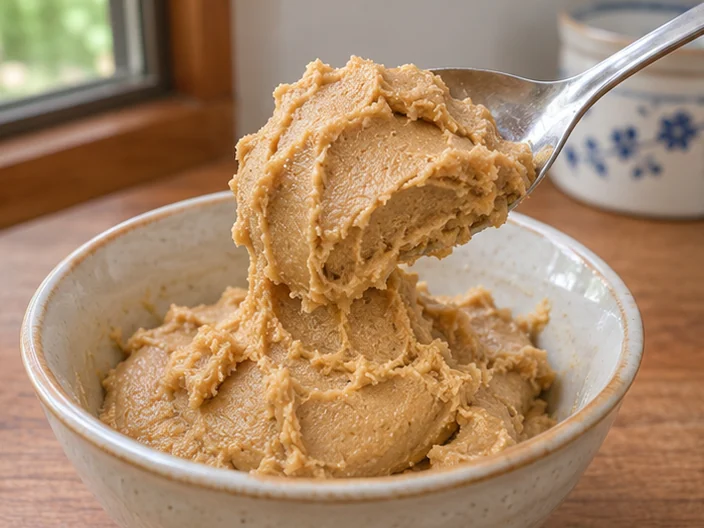
Stir the sesame paste thoroughly in its jar, then measure 50 g / 3 US tbsp into a small bowl.
Lift a little with the spoon. The unthinned paste will cling in a heavy lump, which is normal.
Add the toasted sesame oil and stir in one direction until no oil sits on the surface.
How to tell you’re readyThe paste is still thick and drops from the spoon in a heavy lump, with no separate oil in the bowl.
Add the warm water in three batches, mixing each one in completely before adding more.
Mix in 3 teaspoons soy sauce and half the vinegar until even in colour.
Taste with a clean spoon. Add 1 tablespoon warm water if it is too salty or thick. Add ½ teaspoon sesame oil if the aroma is weak. Change one thing at a time, mix, and taste again.
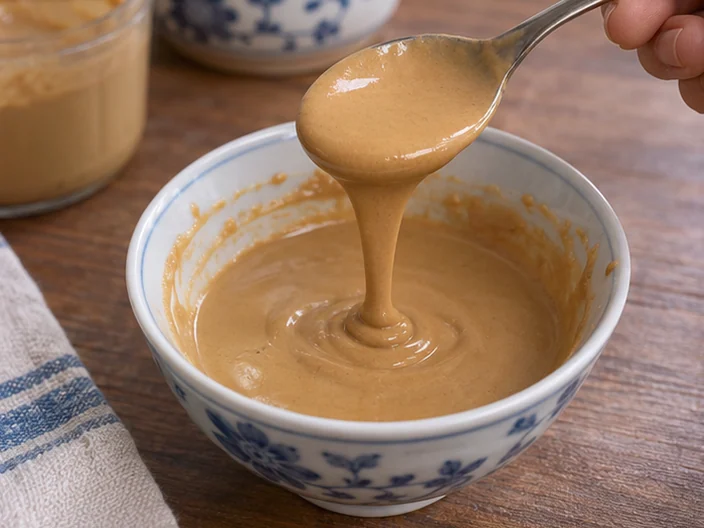
How to tell you’re readyThe sauce is smooth and falls from the spoon in a slow ribbon rather than one heavy lump.
Compare the textureBefore thinning, the paste sits in a lump. Once ready, it falls from the spoon in a slow, thick ribbon.Cook from this step
AI illustration
Step 03
Cook the alkaline noodles as directed
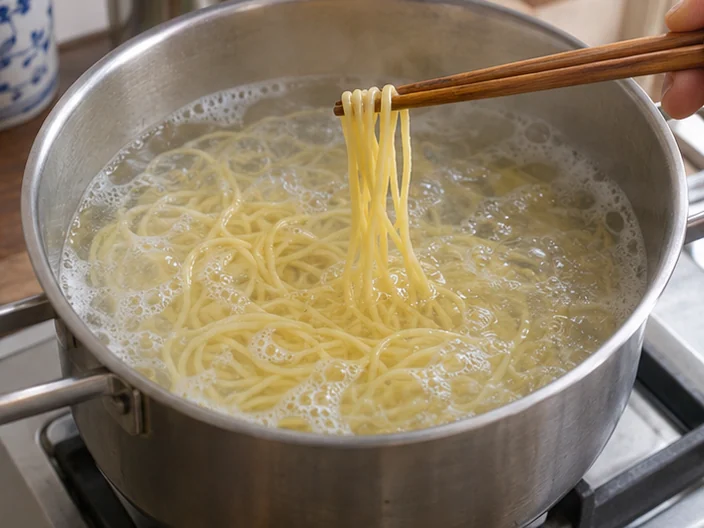
Bring a generous pan of water to a full boil, then remove the lid.
Add the noodles and separate them at once with chopsticks. Follow the package time. If none is given, start checking after 2 minutes.
Lift one noodle, cool it, and bite through it. It is ready when there is no hard white core and it feels springy rather than hard.
Turn off the stove. Scoop 3 tablespoons of noodle water into a cup for loosening the sauce later. Tip the noodles into a strainer and shake gently. As soon as the water stops running out, toss the noodles while hot.
How to tell you’re readyThe noodles are separate and springy, with no hard white core and no stream of water dripping from the strainer.
Tip the hot noodles into the large bowl and immediately add the sesame sauce.
Hold the bowl steady. Lift noodles from the bottom with chopsticks and drop them back for about 30 seconds.
When most noodles are pale brown, taste a small bite. Add the reserved teaspoon of soy if bland, 1 tablespoon noodle water if heavy or dry, or the remaining vinegar for more tang.
After each addition, toss from the bottom about ten more times and taste before adjusting again.
How to tell you’re readyThe noodles remain separate and evenly coated, with no puddle of water at the bottom.
The sesame paste became stiff like clay as I mixed it. Is it ruined?
Stop pouring water. Stir firmly against the base for several turns, then add 1 teaspoon warm water and work from the centre outward. Add another teaspoon only after the first disappears.
This can happen as sesame paste takes in water. It is ready when glossy again and falling from the spoon in a thick ribbon.
The noodles cooled and clumped before I finished tossing. How do I loosen them?
Add 1 tablespoon reserved hot noodle water and lift the noodles from the bottom. Add one more tablespoon only if they still hold together. Do not flood them with sesame oil.
Stop adding water when the chopsticks can lift small separate bundles and no liquid pools at the bottom, then finish tossing immediately.
I added too much vinegar and the bowl tastes only sour. What can I do?
In a small dish, smooth 1 teaspoon sesame paste with 1 teaspoon warm water, then toss it into the noodles. Taste before making one more small portion.
Stop when sesame is noticeable and the first taste is no longer sharply acidic. If the bowl is already loose, add a small handful of plain cooked noodles instead of more water.
If the paste clumps after adding water, stop adding liquid and keep mixing. It often tightens before becoming smooth. Press any firm lumps against the side of the bowl.
If the centre is still hard, return the noodles to boiling water for 30 seconds and check again. Over-soft noodles are still edible; reduce the time by 30 seconds next time.
If the sauce sits in a lump at the bottom, add 1 tablespoon noodle water and toss upward from underneath. Use the same fix for clumped noodles without flooding the bowl.

 AI illustration
 AI illustration
 AI illustration
 AI illustration
Kitchen notes
Ask about a step or share how it turned out. Your comment will be public.
Loading comments…